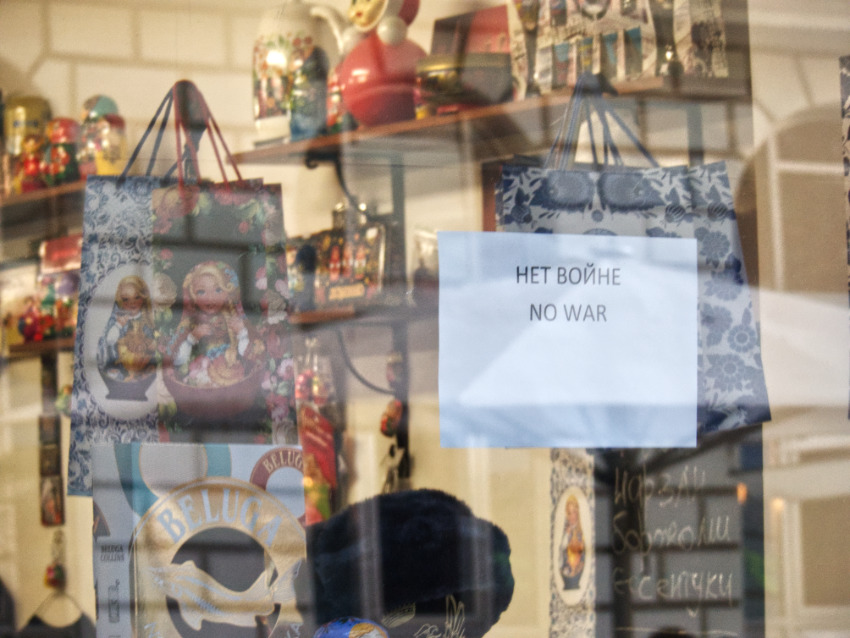
Vienna has become a three dimensional open university of the street and the people. Each daily interaction; shopping in the supermarket, a ride on the U-bahn, sitting in the park, buying a map, taking out the rubbish, has a cinematic quality, although its unclear who the director of this film might be.
There are four books on the table. They have magnetic power and are read in different ways.
The Architecture of Red Vienna 1919 – 1934 by Eve Blau is being read in long sessions in the morning. It is a book that has to be studied. Occasionally I abandon this linear approach and flick through the index looking for references to particular buildings. It is clear and well written but at times the ideas and outlines are dense and heavy.
I feel as if I’m doing a PhD in a subject I don’t know much about. It is also immensely rewarding. Some effort has to be expended to avoid a mental panic. I won’t have time to work it all out. Perhaps, I could come back.
Rebel Modernists by Liane Lefaivre. A nice addition to Blau as Lefaivre approaches some of the issues in a different, and in some ways, more political way. Good sketches of key characters such as Adolf Loos, Josef Frank, Otto Wagner and others.
Gestalt Therapy by Frederick Perls, Ralph F. Hefferline, Paul Goodman. This is acting as a background, bits and pieces of ideas appear during the day. Ground/figure; stuff like that. It is absurd not to study psychology. Secretly, I think some on the left feel they are above such things. That the party will keep them warm at night. Sort out all their inner life. Good luck with that.
The World of Yesterday by Stefan Zweig. His words echo in so many of the conversations I’ve had with people.

At Kettenbrückengasse a woman steps on to the U-Bahn train. She is thin and gaunt. She looks haunted. She has a war-look about her. Has she managed to escape the front line in Ukraine? Is this a slip through the space-time continuum? There must have been thousands of women who looked like this in the summer of 1945 in Vienna.
The so-called Red Army’s occupation of the city was brutal. What memories are there here? What conversations about that time? I asked someone in a bookshop about it. He said no-one talks about it. There are no books on the subject. Is this true? There were dead bodies in the streets. And terrible trauma.

The city in general has less of the high-wire tension that a city such as London has. But all is not well here too. I was taking photographs of the Losenhof (a housing estate). A big car pulled up. Blasted its horn. A surly looking pimp-man stared at me. I continued to take photographs of the building. Two young women hurried over to the car and handed over an envelope. Of money? Drugs?
They walked off trying to hold their heads up as if nothing had happened but they had the air of humiliation all around them. The car drove off, the surly pimp-man still staring at me. I’m sure they could kill me if they wanted to.
But it’s asymmetric warfare. The casualness of standing in the street, with a camera, a notebook, taking notes. Not of their world, not wanting to be in that world, being bored with that world. The big car, gold watch, derogatory remarks. It’s a trap; and they are not too stupid to realise that too.

Fragments in a notebook, fragments of walks through city streets.
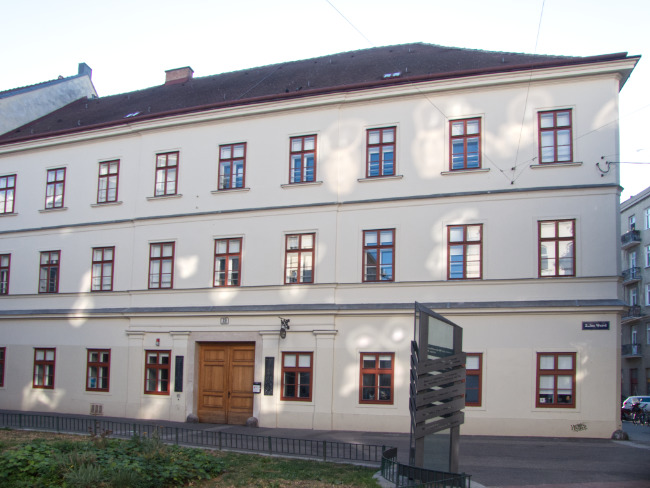
The most demoralised section of the population. Why did I write this down in Tabor Strasse? Why was I in Tabor Strasse? Because I had been here before and I wanted to piece together once again my mental map of the city. But the city has changed, I’ve changed. The memories are both vague and lucid. And now new memories are being generated and layered on top of all existing ones. I was sure this building was green. But it’s red. Perhaps there is a green version somewhere else.
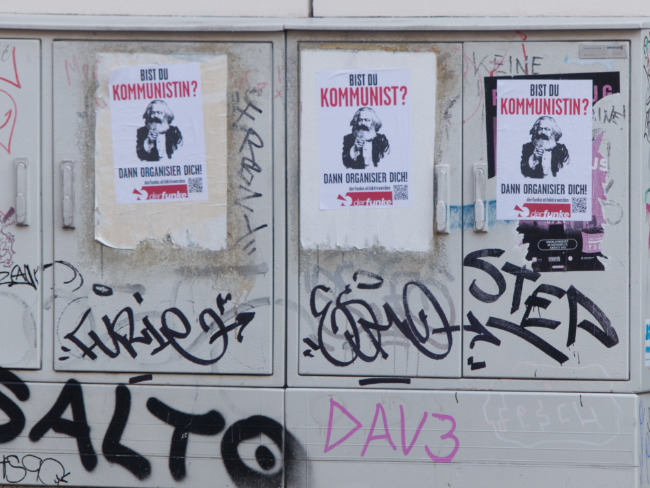
Tabor Strasse in the early evening. It is alive with people and therefore possibilities, even if they are just imagined. It is the imagining of the possibilities which helps to keep us in motion. This might happen, that might happen.
Not utopias (although that would be good too); but the unexpected, conversations, intimacy. Being aware of movement, of sensual feeling, the experience of the five luxury senses. A woman walks past me pulling a shopping trolley. She wears a blue dress. Glances in my direction, glances ahead, walks on ahead.
A young Jewish man in a black frock coat and black high top felt hat. On the ground, I stop, pulled by something that is not easily explained. It might be easy to miss.

Four Stolperstein. This is where hate leads. A family, a young boy of eight years old, a small girl, not even a year old, murdered in Auschwitz. This is where hate leads. They are all culpable in this. Putin, Trump, Johnson, Mohammed Bin Salman, Orban. They are blowing the bellows on the embers that where never extinguished in the death camps. A mask, a cloak, an opportunity full of lies. And the world marches along. To where?
Somewhere in-between this we live our daily lives. What’s the production of semi-conductors in Taiwan got to do with me? Perhaps if we ignore the collapse of property speculation in China it won’t force down our wages and put the prices up. Instead I make notes for supper; pepper, garlic, onions, courgettes, spring onions, lettuce, red currants.
In Werd is a square near Tarbor Strasse. Kids are playing without any obvious supervision. A group sit in a circle with scooters and bikes piled nearby. They are maybe 10 years old, boys and girls. They are holding councils of peace, writing anti-war manifestos. They need to hurry up. They are the next generation of cannon fodder. The recruitment age is falling, wars are becoming more intense.
A younger child, perhaps six, races his bike in circles where the market stalls have been packed away.
There is a tendency on the streets to encourage the classification of people by their external characteristics. White, Black, Turkish, Indian, Male, Female, possibly queer, perhaps trans, maybe a rebel, obviously a stiff. But so much is hidden.
The classifications can be worked out in different ways. It’s harder, but more interesting, to see people in the streets as nurses, post office workers, engineers, train drivers, plumbers, project managers, lift maintenance workers. Because it is by work that the definitions take on different forms. Software developers, mechanics, printers, U-Bahn driver, brick layer, steel erector, shop worker, baker.
Tourists should be considered like this too. They are here as tourists but in another land they are also workers. Or, in some cases, members of the upper layers of the Communist Parties of China or Vietnam.
There is a lot of displacement. A lot of people who have nothing, nowhere to call their home. A lot of people unsure. Here in Vienna it feels (at least to me) as if the Austro-Hungarian Empire is about to collapse.
But I’ve only just arrived with a suitcase full of books and some empty headed muddle I’m trying to fill up and straighten out. I imagine that any language I don’t quite understand (a lot) is from Croatia, the Czech State, Hungary, Montenegro, Albania. I can hear Russian voices on the streets and Ukrainian ones too. And Black African French being spoken. Occasionally an American voice or two. Was that tone from England? I should have stopped to ask some questions. There are a lot that need an answer.
Vienna is full of spies. Displaced people. Putin was in the city in August to sign a gas agreement. I think the press in England was more concerned with something the Royal Family said or didn’t say. Outside St Stephen’s cathedral.

There are seven police vans and two cars. They don’t like cameras and notebooks and people taking notes either. They’re just the same as the pimp-men and they’re the mirror image of the cops. They sit and stare and chew away and look bored and are bored. And guess what? I’m bored with them too. Police and thieves. In the streets.
I want to be in a left that makes me feel as if we’re acting out parts in Breathless. All the stuff that Jean Luc Godard wanted to be included in the film but was refused. It’s all on the floor of the cutting room. There’s a revolution in there.
All the best revolutions are completely invisible until the day of the revolution. And then everyone says, ‘I knew it was there, just didn’t realise’. That’s much harder than pseudo-party building; but immensely more powerful.
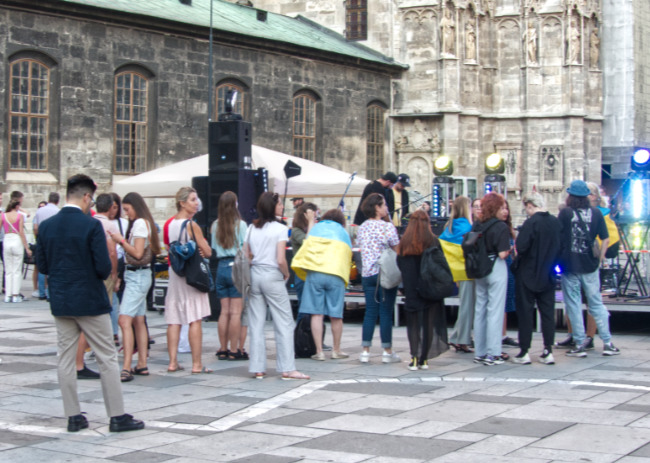
But Vienna is full of spies. Who is taking photographs of who? Are those two women Russian? Why are they taking photographs of the small group of people, some of whom are wrapped in Ukrainian flags?
They look so ordinary. Some are like the middle class women you might find in Stoke Newington. Others have a more Stratford working class council estate look (I appreciate these are London references; there are almost certainly equivalens for Vienna, Prague, Berlin Paris, Madrid, .and a thousand cities and towns in between. I realise I write so euro-centrically, it is only a small place that I know a tiny amount about).
They might be teaching assistants, librarians, experts with GIS software. They could be you or me. The bells of the cathedral ring away in a crash-chime way. And then sound out seven times to mark the clock.
Now it feels as if it might be 1938. The whole of 20th century history in the early evening hours. It’s all there, and more.
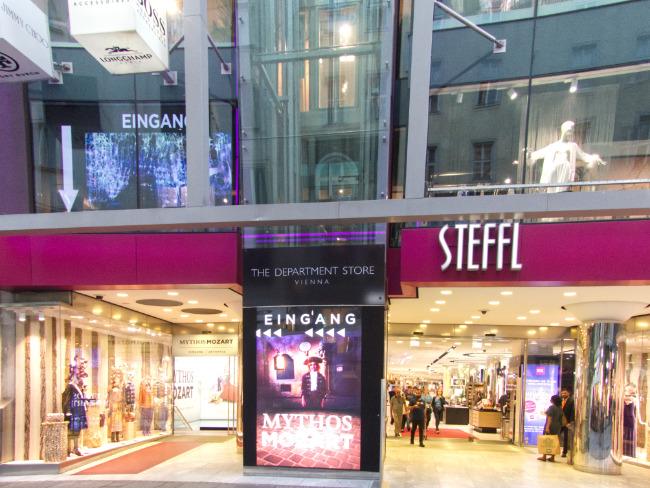
In the Kärntnerstrasse a woman, dressed in a black jacket and black trousers and white shirt, is sitting in a certain way and writing neatly in a book. It is clear that there is already several pages completed and several pages more to come. Another woman sits on the edge of a bench playing Paganini loudly on a violin. People are genuinely listening. When she finishes there is a huge round of applause.
A street entertainer, made up as Cat Women, is dancing to, ‘Fever’, she does the splits, arches her body, rolls over on the dusty concrete.
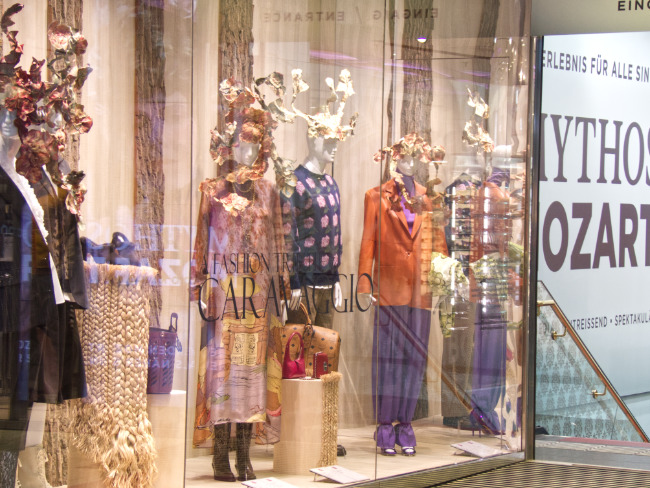
To what extent has consumerism weakened the attraction of socialism? It’s just a note. It needs more research.
I think these two people are officials from the Vietnamese Communist Party. And then realise I know nothing about such a thing.
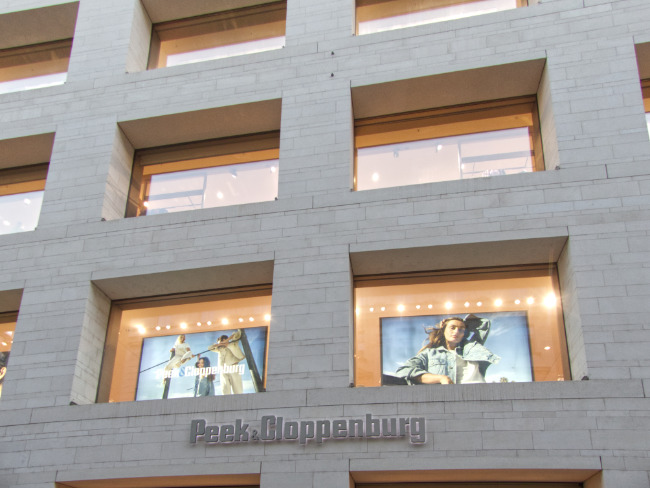
Vaguely in the distance there is shouting through a megaphone. I’m hoping it’s a left wing movement but don’t want to be disappointed by anti-vax and conspi-racists. I’m not in the mood for that. Hissing dead-smoke breath. It would spoil the day.
I’m tired, here’s Karlsplatz. A girl walks by in pink Barbie fashion; but she looks no fool. Something that’s harder to spot is who might be working class. She might be. There’s an air, a coolness, a hardness, a certain style. What if class was the main defining characteristic? What then? The corporations must suffer.
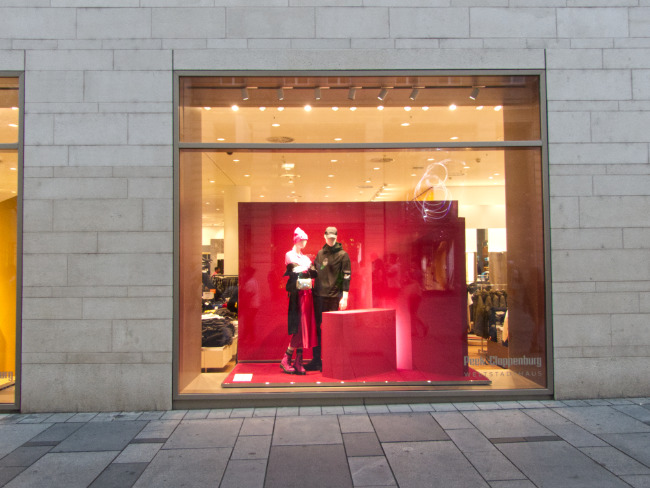
It’s all here; fascism, anti-fascism, sanity and madness, science and anti-science blah blah blah. Dirty money, freedom corrupted, democracy upstaged, rationality unhinged.
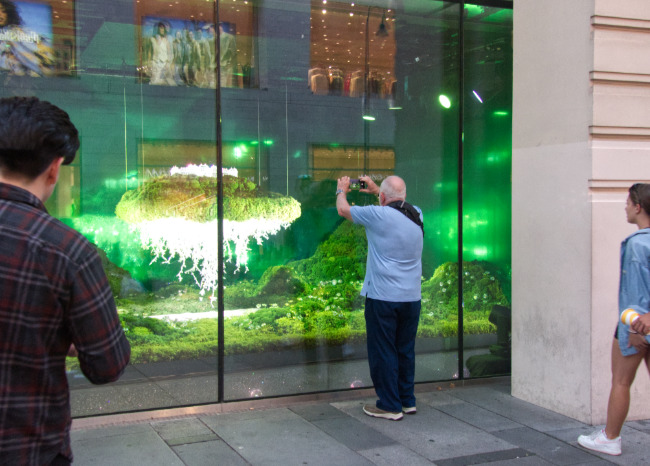
Capital is constantly at war with itself. Capital is constantly at war with each and every other formation of capital. The particles of this war are as a miasma; they drench the air, they saturate the people. War becomes in all of us.


It is the destruction of capital that is needed. Then capitalism will fall away.
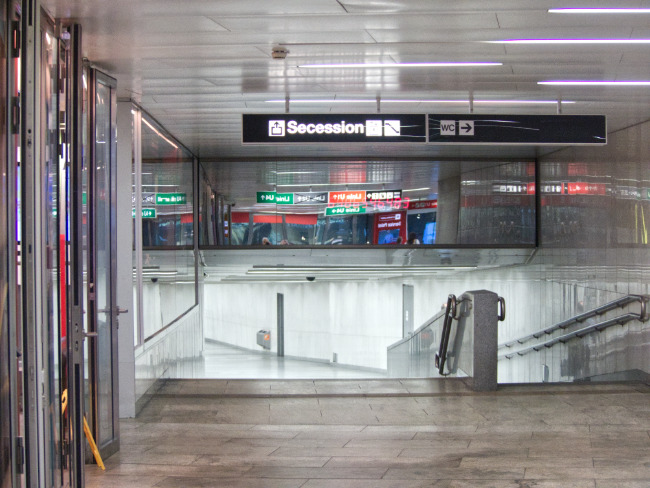
I reach the door of the flat of where I’m staying. I’ve learned the foibles of the door key. How to push the door and then pull the handle in just a certain way.
It feels like coming home.

 Commodity Fetishism
You must be logged in to post a comment.