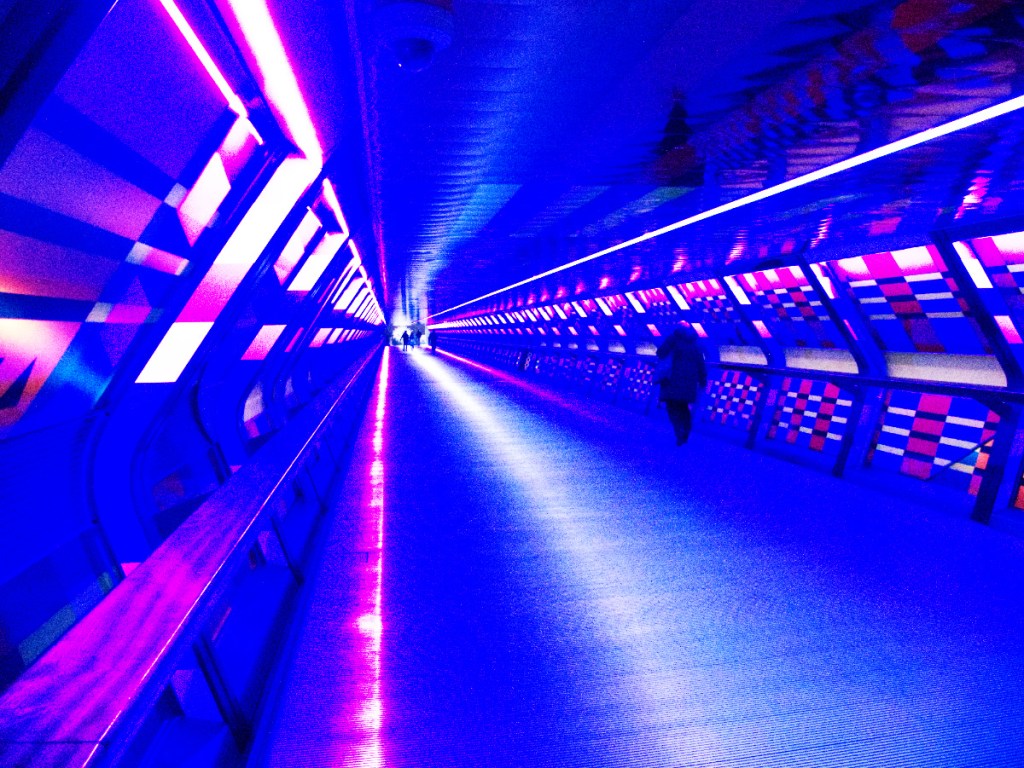
The Canary Wharf development on the Isle of Dogs is one of several excellent places to study Marxism. The key ingredients of the recipe to cook up ‘Capital’ are all easily found. The exploitation of labour, the bringing together of large quantities of raw materials, money, and the division of society into two main classes are all here in abundance. The working day can be studied here, as can the impact of technologies, the application of scientific knowledge and revolutions in the tools of production, the means of communication and the creation of global markets.
At first, I was going to write something called ‘Canary Wharf & the Corruption of Empire’; along the lines of empire building in the eighteenth century, the role of slavery in the development of the British economy, and the new development of tax havens and offshore banking. I think that will come later. For one morning on a recent commute to work, I slipped Ludovico Silva’s Marx’s Literary Style into my bag and enjoyed reading it on the train. As the train emerged from the tunnel under the Thames, there in the distance, Canary Wharf, a cluster of luxury apartment and office block high-rise boxes. The organisation of exploited labour into concrete, glass and steel. Filled up with computers and all the consumer debris of shopping centres.
Once, the area was full of docks and ships and dockers. Then it was known as Dockland. With the impact of containerisation and the union busting of the employers, the docks were closed, the dockers made redundant and port facilities expanded at Tilbury and Felixstowe, and more recently at DP World London Gateway.
No one notices capital accumulation until it is expressed in ships, machines, buildings, factories and the constant changes in the metropolis. By then, it’s too late. As capital expands, it impacts on the consciousness of people, even Estate Agents, or perhaps, particularly Estate Agents. The new world of high rise buildings surrounding now ship-less docks was re-branded as ‘Docklands’. That ‘s’ represented a big change in the balance of power in east London; from organised labour, particularly in dock unions, to the organised power of big capital.
To be able to write about Canary Wharf & Marx’s Literary Style I need to understand the area better. One cold evening I took the Docklands Light Railway that runs in cut-through ditches and trenches, over concrete viaducts and bridges and into mysterious tunnels. It was dark and gloomy and then without much warning, great walls of partially lit up glass walls were revealed. The train stopped at Canary Wharf station. Change here for trains to Lewisham. Don’t forget your belongings. Watch out for anything suspicious.
Canary Wharf is over-bearing, monotonous and monolithic. Despite its mass and size it lacks any majesty or anything that is really monumental. There are narrow multiplications of use; would you like an office in this glass box, or would you like an office in this other glass box? Would you like a global chain store in this shopping centre or would you like a global chain store in that shopping centre? Would you like an expensive flat in this high rise box, or would you like an expensive flat in this high rise box?
The whole area received substantial state support in tax concessions and the provision of infrastructure. All of the organisations involved with it – both historically and in this present – are conservative; Trump-Republican, Emirate dictatorship, Saudi autocracy, Chinese Communist Party tyranny and Russian tax haven corruption. For liberals, these are strange associates. Marx could see this stuff as plain as the sun in the sky. They all represent variations of capital, they are all agents of capital, they all base their political power on capital. This is the global ruling class. They worship different celestial gods but they all bow and pray to money in the same way.
Canary Wharf is attractive to this class because it is a homogenised landscape of replicated offices, identi-kit expensive flats and chain store shopping. The more homogenised the topography in this way, the easier it is for homogenised capital to flow in (although increasingly it seems harder to flow out).
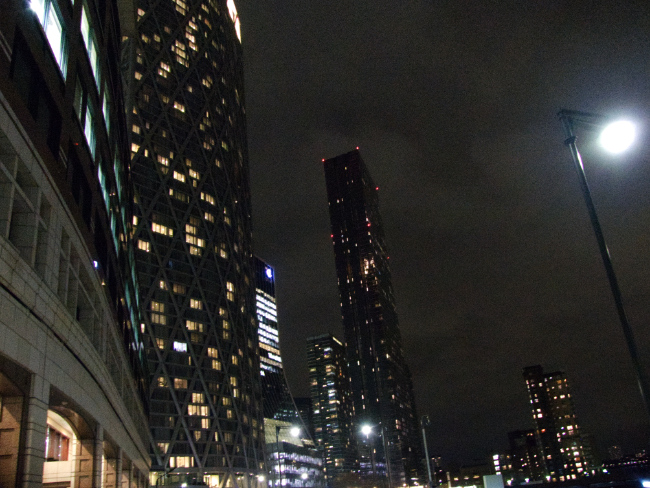
It felt lonely here. I wanted a drink but only had a couple of pounds in my pocket. I wondered if there was anywhere I could start a slate with the bar staff. But it didn’t seem likely. I bet that was relatively easy in the days of the docks.
The whole area seemed deflated. Many of the buildings had floors which were unlit. Is this a sustainability drive, switching off the neon lights in a vain attempt to save the planet, or is it under occupancy? I suspect it’s the latter. According to short item in the Financial Times on the 7 Feb 2024, ‘A Canary Wharf building that went into receivership last year is to be sold at a 60 percent discount to its last sale price, one of the largest distressed sales in London so far and a sign of how sharply the value of some offices has fallen’.
This phenomena of unlit buildings was first described by Ann Minton in her book Big Capital. She used it to refer to luxury apartments which are sold as ‘buy to leave’. Investors buy them with no intention of ever living there, nor of even letting them out. Nine Elms and St George’s Tower are well known for this. The first time I saw it I was shocked. Now it seems there is dark light in office buildings.
This phenomena is best seen at night and when you do, there is no sense of triumph in that ‘capitalism isn’t working, rejoice’. It feels frightening. Someone is going to have to pay for this and unless we defend ourselves it will be us. No matter how rich the capitalists are, they hate losing money. And if property is losing money, as it is in New York, across China and in London…..then the assault by the capitalists upon the working class to reduce their losses will be severe.

Canary Wharf feels as if it’s losing life, struggling to breathe, an outdated model, not big enough, lacking glamour, trashy-tacky. What’s going on in Paris, Rome, Berlin, Moscow? Will Dubai and Shanghai become competitors? I got the feeling that global capital doesn’t need to be here anymore. It is a disjointed topography, adrift from a place that we all understand as ‘London’. That’s further west.
There is nothing magnetic here, nothing to pull you in – unless you actually work here. There is nothing of the Bohemian mystery of Fitzrovia or the razzamatazz of Soho. It doesn’t have the bourgeois elegance of Mayfair or upper middle class arts and crafts of Chelsea. It doesn’t have the sprinkling of Wren churches, the centrefold of St Paul’s and the intimate nineteenth century pubs of the City. It doesn’t have the lazy river feel that can be found upriver of Battersea bridge.
A lost London for the 21st century. The tectonic plates of capital are shifting, immense forces in conflict beneath the surface. Earthquakes are coming, eruptions of hot spitting missiles to realign the world. There are bodies in the rubble, softly sobbing, screaming. A six year old girl sits in a car, surrounded by her dead family. She uses a mobile phone to call for help. No one is listening. She is also killed.
They shoot children don’t they?

 Commodity Fetishism
You must be logged in to post a comment.