
The waiting time marches along quite briskly. I walk around St Pancras station, buy some more snacks, a roll, extra water, cheese straws, a large bar of chocolate. The days have become blurred and confused. It’s Thursday but I’m out of synch with myself by 24 hours. It’s still Wednesday somewhere in my head that counts the minutes and the weeks and months. Or rather, the regular drum beat of work time has been replaced by travel time. It stretches out. Long periods of sitting around punctuated by announcements and electronic noticeboards recording departure times. In the waiting room at St Pancras station I’m reading Fallen Bastions: The Central European Tragedy by G.E.R.Gedye. I’m wondering if there is any city in the world that has never experienced an atrocity.
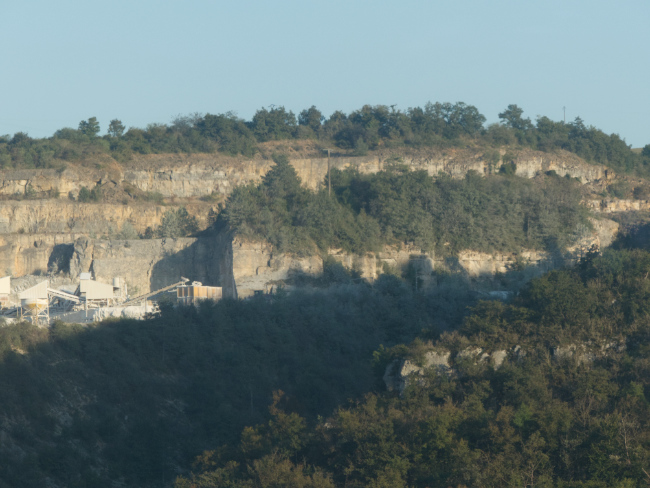
Someone is sitting in my seat by the window on the Eurostar train. A young woman writing with a pen in a notebook. Neat sloping hand written notes. It would be so damn stupid and old and dull to say, ‘you’re in my seat’, so I don’t. An elderly American man is standing up, looking over the seat in front.
‘You doing ok?’ I ask, unaware of where he might be from at this point.
‘I think so’, he says in a slow America way that introduces images of Chicago in my head. Although I have no idea where he’s from.
And then some other people arrive and explain him and his wife are in their seats.
‘We’re numbers 91 and 92’, he explains.
But it’s the wrong coach. This is 11, their seats are in coach 10.
I help an elderly French man put his suitcase in the overhead rack.

I sit down and say to the young woman (who is sitting in my seat) and say,
‘It feels as if some people have never been on a train before. In fact,’ I add, ‘that they may have never left their home before’.
She laughs and says, ‘and they were American, and that’s where I’m from’. And a few words scattered around here and there and we’re off on a conversation that covers the southern states of the US (she’s from New Orleans), the history and culture of those states, Nashville, Tennessee, New York, Bible Belt conservativism, Birmingham Alabama, the Civil Rights Movement, Martin Luther King, Malcolm X and much more. She throws in a sprinkling of fascinating anecdotes about people and places that bring everything alive.
We fall into a silence and look out of the window.
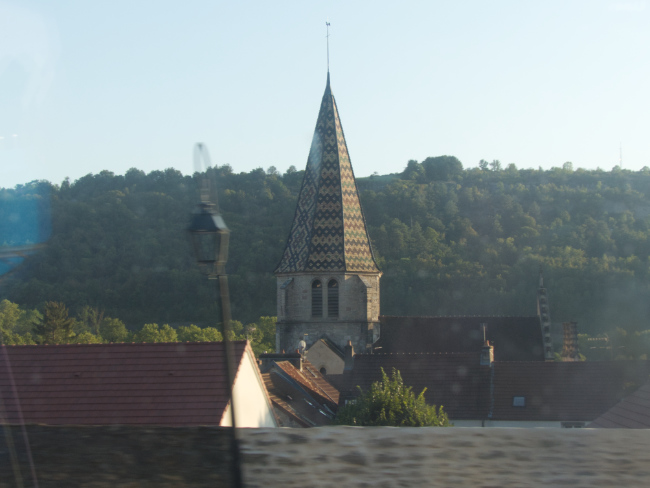
And then the conversation starts again and she tells me about her work in travel, showing people around the US military sites of Guadalcanal, the Ardennes, Normandy. Visits to the death camps in Germany and Poland. The complete destruction of Warsaw during the Second World War. Why the lessons of history don’t seem to be learned, why the world is wobbling once again into murderous chaos.
She is funny, sharp, sassy and clever and I feel as if I’ve attended a first rate lecture delivered with an erudite lightness of being. The train rolls into Paris. The muddle of housing estates and warehouses and people racing with incredible slowness in the traffic jams of the suburban motorways. We say goodbye with no exchange of emails or invitations to social media profiles. That is refreshing and sometimes as it should be.

Paris Gare de Nord has the familiarity of a car that won’t start. It appears to have been wiped down with a damp rag and the cobwebs in the corners brushed away. Into the metro, I’m looking for green line D to take me to Gare de Lyon. I have a Paris travel pass and I’m sure there are at least three journeys left on it. I get into the metro but then it occurs to me that I might not get out so easily. The short train journey reminds me of the opening sequence of Tarkovsky’s film Solaris when for an age the film sequence of a motorway with an endless sequence of cars and lorries. It’s a while since I’ve seen it and must do so again. Into the metro, and perhaps out into space, to Solaris. Instead the train tumbles into Gare de Lyon and I walk towards the barrier.
The world is a stage and we all act upon it. But if there was real democracy in the world, some of the current leading players would find their theatrical involvement demoted to sweeping floors and putting out the rubbish. In a world ruled in a different way some of the ghastly characters who now dominate the spot lights would be in jail.
As promised, a black coffee and cake, even in a Paris railway station is a joyful pleasure. I put the cup on top of my suitcase. It makes a useful table.
And then the electronic board indicates the platform for the train to Zurich and I join the crowd that is all trying to push through the barrier at exactly the same time.
There is another woman sitting in my seat by the window. I can’t remember now how the conversation starts but off we go. Europe, Brexit, Le Pen, the growth of the right, the collapse of the centre, the growth of the left (in France), Macron, poverty in France, poverty in England, immigration, cost of living. It feels like a collapse of a certain social structure rather than a catastrophic event like the start of a war.

But what’s causing this social collapse? Immigration comes up in the conversation, not in a negative way. The person next to me is explaining stuff about racism in France and where the support for Le Pen seems to be coming from. I personally don’t believe it’s immigration that’s the cause of the social collapse and nor does the person I’m talking to. It’s poverty, alienation, the expectations raised by capital which are rarely met in the emotional way that people are expecting. The housing crisis, the health crisis, the boring monotony and purposeless character of a great deal of ‘work’.
I put forward some of my thoughts on immigration; that the centre, and parts of the left, don’t spell out what a great deal of immigration is about. That capital needs this endless supply of cheap labour. Labour that can be sucked up and then spat out when exhausted.
That certain industries and services are predicated on cheap migrant labour; construction where the worst jobs in the large construction sites in London are done by Rumanian and Bulgarian workers. Agriculture, where the fields of Kent and Norfolk and the productive land are farmed by labourers from across eastern Europe. The care sector where women from Africa, Eastern Europe clean up the vomit and wipe the backsides of the elderly parents of people who shout ‘send them back’.
Of the City of London, where 670,000 people work in finance, insurance, the legal sector, commercial retail estate, global asset management, commodity trading, currency exchange and much else. This is claimed to be the most diverse workforce in the world with 37 percent of the workers classified as BAME. And of course, a global financial centre – London is either number one or two depending on the definition – requires a global workforce. If a business wants to ship goods from Karachi to Hamburg with a cargo insured in London then someone who can speak English, German and Urdu is going to be a productive asset. And in London such people can be found.
Instead we get a numbers game. ‘There’s too many’; but for the likes of Farage and GB News there will always be ‘too many’ because actually for them, it’s not about numbers, it’s about weaponising immigration to further their self-serving get-rich-quick schemes. The funders of GB News are based in Kuwait, right-wing Christian Fundamentalists who have read the Bible in such a weird way that where Jesus taught tolerance, love and friendship, they read hate and bile and fear.

We cross the French-Swiss border and the train stops at Basel. The train is settling down for the evening. New friendships being made, people buy each other coffee, strangers until just an hour or two ago, swapping anecdotes and deeply personal stuff about their lives. The best of their funny stories and escapades, the top ten photographs on their mobile phones.
The sun is setting to the west, salmon pink paint wash across the Alps. In the mountains the Resistance fighters moved. The French and Italian Partisans.
Ada Gobetti wrote a diary during the Nazi occupation. She regularly went to Torino to organise the resistance fighters. Even the act of writing a diary could result in being shot. She kept it safe during the war. She records an occasion when her son Paolo moves out across the countryside to find an informer who they shoot.
When they come back to the house, Ada records how she looked in his eyes to ‘see if there was any hate there’.
On the liberation of Torino, Ada is photographed surrounded by heavily armed partisans. She is carrying a huge bunch of flowers.
The forces of reaction are mobilising; but where there is reaction, so too resistance. I would rather we lived in different times, but these are the times we are in. All the lessons of history we must learn in a condensed way.
Perhaps this time we can stop the clock of history stopping at the midnight of the century.
 Commodity Fetishism
You must be logged in to post a comment.