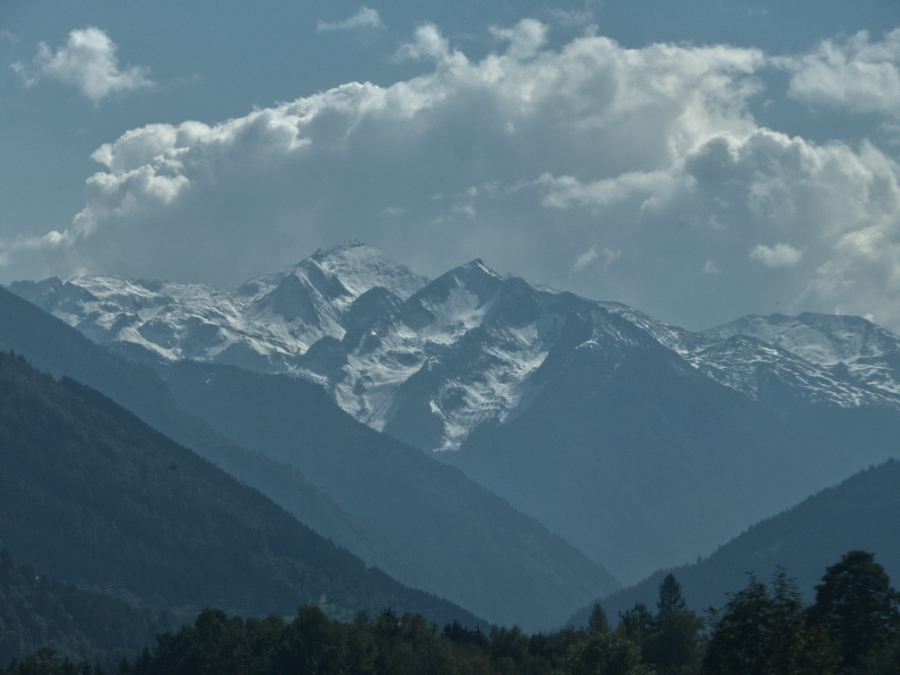
The internet never sleeps. Throughout the night, cloud services, DNS servers, satellites, fibre optic networks, submarine cables are full of the relentless energy of packet switching data. In the early morning I wake up after a restless sleep in a cheap hotel room in Zurich. ‘Try the clear Zurich water!’ a sign says on the desk. I do, and it’s delicious. I imagine it has been freshly poured from the mountains. There’s a batch of emails waiting. ‘Trains cancelled, trains diverted, replacement bus service, trains running normally’.
I walk through the narrow streets to station. Chicken Delight, Burger King, Best Kebabs, shops selling designer trainers, jewellery and high fashion clothes. Workers in orange overalls are working with steady hard labour to move the rubbish. A small truck drives up and around the cobblestones thoroughly washing them. I cross the bridge over the river Limmat, part of huge crowds of people on their way to work and college.
A young woman with long flowing black hair, wearing flared and baggy trousers, eating a croissant passes me. A woman shouts at someone who is cycling fast and furiously on the pavement. People stopped at the red light crossing zones, staring at the train station, or staring at nothing much at all, a thousand day dreams, morning worries, regrets, fantasies, wish lists and desires.
When I arrive at the station I go to the information kiosk to determine what’s going on. ‘The train is running as normal’ is the response. Too much internet, not enough information.

On the train I’m sitting opposite a couple from Delhi who are travelling around Switzerland and Austria. We ask each other a great set of questions. They explain the immense and rapid expansion of India, the construction in the cities, the infrastructure projects, the huge ring road being built around Delhi, a city of 20 million, of 40 million people in the metropolitan area.
‘We have 1.4 billion people’.
‘India is a beautiful country’, the woman says. She has a wonderful charm about her.
‘We are proud of our country’ she explains.

They are attired in clothes made in India, carry plastic covered copper wire cables and bags made in India, their house will be full of artefacts made in India. A car made in India, a mobile phone made in India, a laptop made in India, headphones, gold bangles sunglasses, satellites, sub-marine cables, high-grade weapons; all made in the country. The people of India contribute to a totality of production in the country in a way which no longer applies in England. Does this create a sense of emasculation among some people in England? Is this one of the determinants that agitates a racist fury in a layer of people?
India is currently the fifth or sixth (depending on source) largest manufacturing country in the world, a major producer of pharmaceuticals, textiles and machinery. India’s so-called ‘vaccine prince’, Adar Poonawalla, the chief executive of the Serum Institute of India recently bought Aberconway House in Mayfair’s South Street for £136m. He is unlikely to spend more than four weeks of any year there.
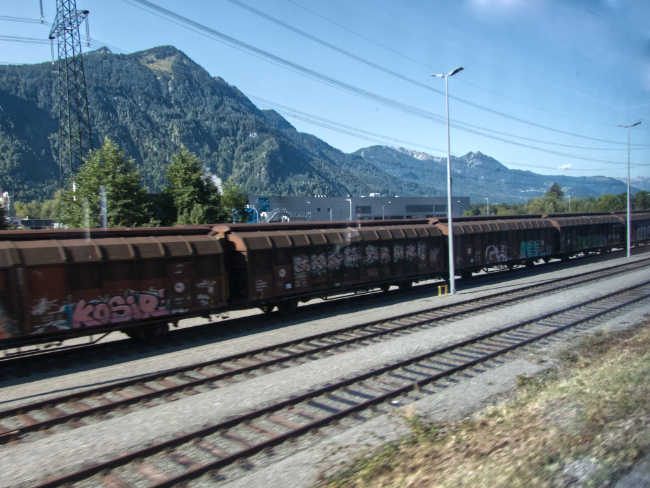
Workers in the slums of Mumbai make oil lamps, suitcases, pots, and a whole range of cheap commodities in tiny, filthy, unventilated workshops which is also where they sleep. Tata Motors’ Jamshedpur Plant is spread over 822 acres and employs over 10,000 workers directly, using advanced industrial machinery to make 200,000 cars a year. The Reliance Industries Limited (RIL) Jamnagar Refinery covers an area of around 30 square kilometres and is the largest oil refinery in the world.
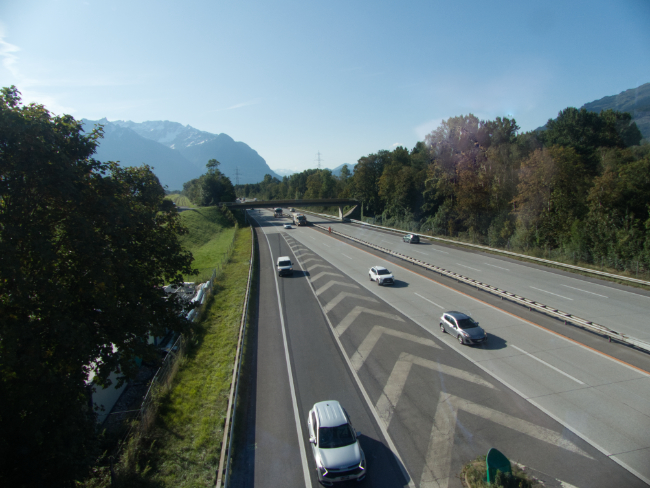
The development of India and China (and others) has been relatively recent and rapid. In the past forty years an immense development of the productive forces, a huge increase in the pile of money, the accelerating bringing together of labour-power, raw materials, money and machines to create capital. Capital draped in national flags and acting as a cypher for nationalist rhetoric.
Capital is competitive and while it flows into every place in the world it can, ignoring, and indeed actively working to break national borders; capital is also in competition with all other capital. At each point of competitive contact a spark of friction ignites. If enough of those sparks come together; then war. There are increasing number of sparks because there is more capital and it is in fiercer competition.

There is ongoing disruption to the railways in Austria, Poland and Rumania due to recent flooding. Huge amounts of rain fell in a day or two, overwhelming flood defences and bursting dams. Even these direct interventions by nature, regular warning signs of the greater catastrophe to come, fail to move governments and large numbers of people into faster action. Instead, a huge conspiracy and false-hood industry, amplified and inflated by dark and dirty money-interests of the capitalists. Shouting libertarians, contrarians, deflection of the real arguments, global reaction emerging once again from the swamp of death and chaos.

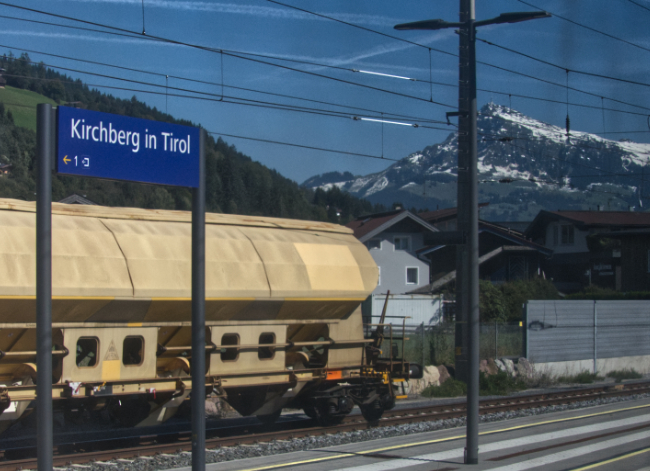
There is just enough time to change trains at Innsbruck for the next train to Salzburg. I am joined on the platform by a Chinese couple who are unsure what’s going on. I explain as best I can that they really do need to be on this particular train and that they must change at Salzburg. At least I get them on the train.
They are still doubtful about this and keep showing me their ticket. I try to explain the floods but they don’t understand. I show them pictures on the internet of flooding across Austria. These are the most dramatic pictures, used to encourage maximum website click bait. They look quite alarmed. The Austrian countryside is going past like a slow film from the train carriage window. It couldn’t be more picture perfect. Where ever the flooding has taken place in Austria it certainly isn’t here.
The woman sits next to me and produces a huge map of Austria in which all the descriptions are in Chinese although the main cities have their European spellings. I have never seen such a big map of Austria and the distances look rather daunting. And then I notice it has the Michelin branding although it must have been printed in China. She keeps pointing to Innsbruck, Salzburg and Wien. The map is so big it feels as if it fills the carriage and suggests Austria, quite a smallish sized country, is of an immense size. She is such a lovely person and I wish I spoke more languages as I would have loved to have talked to her properly.
We change trains at Salzburg and I make sure they get on the train to Wien but we get separated in the crowded carriages. This train is packed, like an early morning commuter train. People standing close together, sitting where they can. I manage to extract Fallen Bastions: The Central European Tragedy by G.E.R.Gedye and even when I’m standing up in the narrow passage between the seats and am constantly having to move for people going to the bar or toilet, I manage to read it.
The growth of the fascists, the manoeuvring of Ignaz Siepel, the miscalculations of Engelbert Dollfus, the passivity of the social democrats when faced with the violence of the right (which they could have physically beaten). Gedye met all of the main characters during his time in Austria from 1926 to 1938. He paints marvellous pen portraits and brings together the political leaders, the parties, the individuals, the masses, the events in a dramatic fashion through the most penetrating writing
I’m aware that occasionally someone glances at me to see what I’m reading. I wonder if people here know this book? And I get a sense of being surrounded by the direct descendants of people who actually lived through that time. Of the people of not just Red Vienna, but its antithesis and destroyer, Black Vienna. And the people who ‘took no interest in politics’, or tried not to, but were also dragged into the maelstrom of dictatorship, a daily terror, horror camps, deportations, state-sponsored murder and war. I wasn’t sure about coming back to Vienna at this point. But now I realise it’s essential. What happened in the city in the 1920s and 1930s is directly relevant to what’s happening now.
I have enough local knowledge to know that it’s better for my onward journey to leave the train at Wien Miedlung and catch the U6 going north. I wait at the station and the train comes out of the dark tunnel with bright lights and a rattle of carriages, squealing of metal and general noise of electrical power. All aboard the worker’s express to Floridsdorf and Red Vienna, Part Two.
It’s taken twelve hours to travel from Zurich to Vienna and I’m tired and hungry. I unpack the suitcase and put the books in order, Otto Bauer The Austrian Revolution, Eve Blau The Architecture of Red Vienna, G.E.R.Gedye Fallen Bastions, Perry Anderson Lineages of the Absolutist State, Janek Wasserman Black Vienna: The Radical Right in the Red City, 1918-1938, a city walks book Rotes Wien.
The host has recommended a pub round the corner that sells food and I set off into the darkened streets. I’m not sure what the atmosphere in the city is. It feels like it has half an eye on me. ‘Who is this?’ the city asks itself. .There is a deep echo from the city, over in a moment, like the boom of a cannon shot in the distance, ‘I have an immense history’. These are the only words the city talks to me as I walk through it’s closed up streets.
The pub is lovely. The first thing is a large glass of the house beer, which, although having a great deal of competition, I would declare as the best glass of beer I’ve ever had. The food is delicious and it clearly needs a second glass of beer to be properly enjoyed.
I’m beginning to feel alive again and open Fallen Bastions. I am being seduced by the golden beer, the way the light from the table lamps falls upon the pages, the sound of cheery merry making from the tables full of people, the words tumbling around the bar and then cascades of good natured laughter.
Something is happening to the book, it has become a time machine, the words are alive, replaced by pictures and moving images, the sounds of Red Vienna, the people of the city, the arguments in the streets and pubs and workplaces and shops and communal washrooms. The people in the pub are now wearing the fashions of the 1920s, they are talking the language of the time, a working class woman is reading the Arbeiter-Zeitung with the date of 20th September, 1924.
Some of the people in this pub have been working on the construction of the new housing, apartments with hot water and central heating and inside toilets and bathrooms. Supported by clinics, mother and baby centres, schools, theatres, cinemas and more. Some are working in the new welfare services which quickly make huge improvements in public health; infant and maternal deaths rapidly fall.
I am in Vienna of one hundred years ago and I must watch and listen carefully.
The lamp on the table goes out and I think this is a sign that it’s chucking out time. And then the waitress walks by and swipes a lamp off another table and swaps it with mine and explains the battery has run out. We both have a good laugh at this as I was clearly struggling to read in the gloom.
But she is more than a waitress. She will also be more than a waitress. She is intimately connected with the past, the present and the future of this city. We have some idea of what the past was, but what will the future be?

P { margin-bottom: 0.21cm }
 Commodity Fetishism
You must be logged in to post a comment.