
Once a year I go to hospital to have my eyes photographed. There is a growth behind one of them and if it changes, then as I understand the procedure, my eye gets taken out of its socket, the growth removed and the eye put back in it’s proper place. It’s always good news to get the letter saying ‘no change’.
The staff today were as usual, professional, good humoured and friendly. The advanced medical equipment that can photograph the eye is a fantastic scientific and technical achievement.
Every hospital in the world should have such machines. And yet despite the fact that the technical means existing to enable this, it doesn’t happen. (Some parts of the world no longer have functioning hospitals; such places exist in the global village).

What struck me today is the ongoing privatisation of the NHS. The private sector is everywhere. IT services, maintenance services, clinical services. Even before I got to the reception there were three different private companies on display. And each must make its profit.

And this is exactly what Farage and his billionaire supporter Musk (‘elite’ by any definition) wants. Expensive private health care of variable quality.
This is a system whereby an eye could be removed, but if the insurance runs out, it might not get put back in.
I could be walking around holding an eye in my hand. An interesting experience no doubt but I would rather it stays in my head.

Unfortunately this approach of private profit and public austerity is one that Starmer and Farage share. Which makes it impossible for Starmer to land any political punches on Farage and his right wing backers in the USA.
I wonder if it’s possible to build a left that’s got a bit more vim than Corbynism, can break with decades of worn-out formulas and develop some catchy slogans and vibrant images that are of the age of mass social media, mobile phones, genocide, consumerism, underground sub-cultures and a global working class of over three billion people?
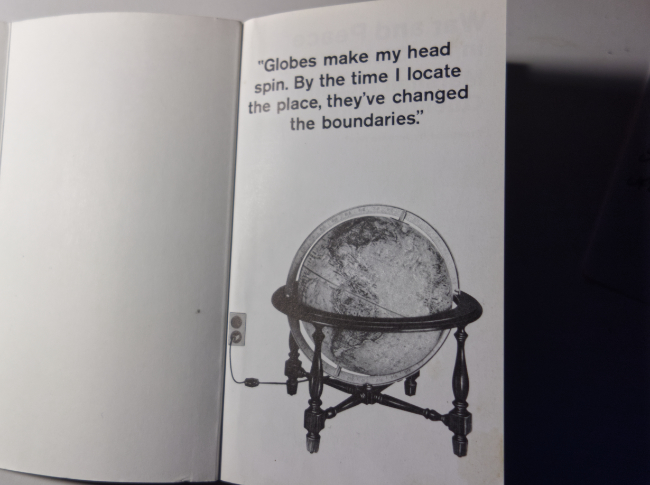
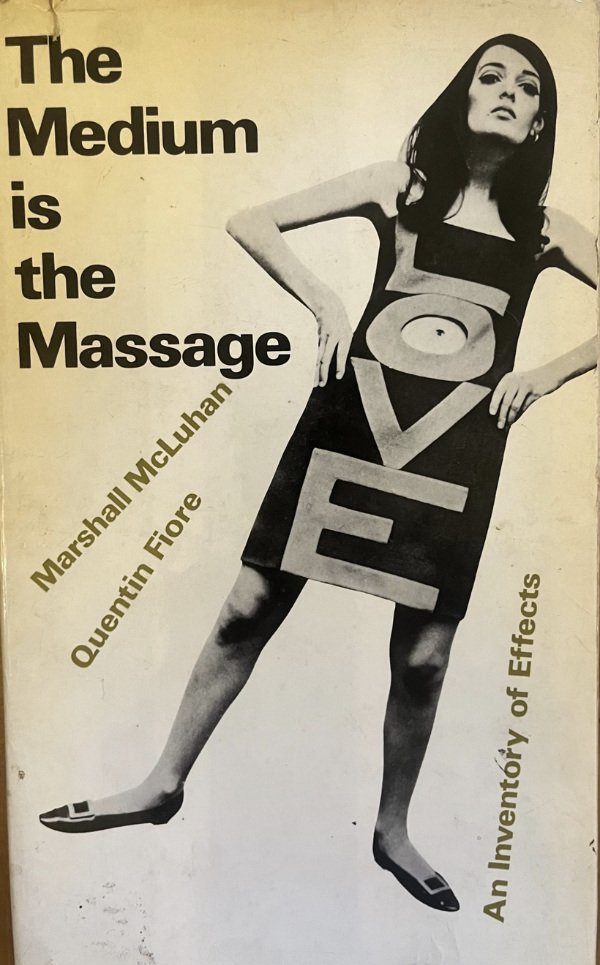
I can’t help feeling we need McLuhan as much as Lenin. And a reading of Marx that doesn’t try and shoe-horn his ideas into every single discussion and debate, but perhaps concentrates on commodity production and how the accumulation of capital is a key determinant in shaping the modern world.
And an examination of the social and political and working conditions in which those three billion workers create that capital.
 Commodity Fetishism