
The question is raised as to why Marx starts Capital with the ‘commodity’. It’s right there in the first line of the first chapter of the first volume:
“The wealth of societies dominated by the capitalist mode of production appears in the form of an ‘enormous accumulation of commodities’ “.
Why did Marx start with commodities? Why not start with human labour, or factories, or classes or technology or something else?
Marx spent around seventeen years working on the first volume. Roughly from 1850, following the defeat of the 1848 revolutions and his exile in London, until the book was published in Hamburg in 1867 in its first German edition. Starting with the commodity wasn’t an accident. It was the conclusion to all the research and writing of drafts.
The writing of Capital needs to be put into context. I cannot imagine Marx wrote the book as if he was writing a novel. A novelist might have a general idea of a story with a beginning, middle and an end.
Or perhaps just a beginning or an end. The creative force that takes over the novelist will sort out the gaps along the way. Capital isn’t that sort of book however.

The novelist has the luxury of making the story up, knowing that the strange force of ‘creativity’ will throw up all sorts of sub-plots and diversions along the way. But Marx, regardless of all the literary and cultural references he makes use of, wasn’t writing a novel. He was trying to find a way to synthesise a huge mass of material, and a means to articulate that material in a way that would describe the totality of capital.
I have a feeling that Marx didn’t realise how complex this would be from his initial labours. He writes letters with considerable bravado explaining that he’ll soon be done with the ‘economics rubbish’ and then will move on to something else. The history of science, a theoretical outline of art, that sort of stuff. Those books are some of the great unwritten texts of the nineteenth century.
Marx becomes strangely quite on the ‘completion date’ the more deeply he studies Ricardo, Smith, Aristotle and Hegel. For these are the roots of his thinking. As he brings together their ideas (and many others) it is clear that he is not a Ricardian or an Aristotelian or Hegelian, although he incorporates their ideas and methods. I doubt he ever set out to create something called ‘Marxism’; that’s how later scholars and readers have described it. He created something called Marxism because none of the existing philosophical, economic and historical systems (if they can be called that) were adequate to describe what capital actually is.

Marx starts with the commodity as a concrete, physical object with a material reality. Commodities can be measured through weight, height, length, width, depth. Their physical characteristics can be described in terms of the materials that are used to produce them; steel, plastic, silk, leather, linen, wool, copper, gold, glass and on and on for all existing raw materials.
These raw materials can be processed; turned into microchips, computer screens, fibre optic cables, tiny steel screws. The processed materials can be be brought together and manufactured into coats, iPhones, shoes, computers, robots, packets of Jelly Babies, MRI scanners, sofas, desks for offices and a great deal more. All shops are full of these commodity-objects. It is estimated that a large supermarket could contain up to 30,000 different individual objects.

But Marx quickly moves on from the physical properties of the commodity, other than how these physical properties help determine the usefulness of the object. A coat can keep the wearer warm and dry, 20 yards of linen can be tailored into a suit, four gallons of schnapps (another example Marx uses), could of course be drunk.
There is usually a clear relationship between the physical qualities of an object and its use. Steel makes for good quality spoons, knives and forks. It is hard to imagine such implements being useful if made of cotton wool or chocolate. Marx acknowledges the usefulness of the physical properties of the commodity but seems to quickly move from this materiality to much more abstract and complex concepts. In fact he soon introduces the idea of value, and points out that no matter how much a commodity is pulled apart, no atom of something called ‘value’ will be found. That is a huge level of abstraction and therefore requires philosophical thought to be understood. It is beyond the science of materials.

[A note of interruption. Marx uses a range of terms: object, objecthood, materiality, thing, object, commodity and so on. I use the term commodity-image-object to describe an object which is a commodity (as opposed to a stick on the forest floor which is an object but not a commodity).
The term, ‘image’ is useful because individual commodities have a strong image identity. This is part of their essence as it were of being a commodity. A fizzy drink is just a fizzy drink. But when sold in a certain distinctive bottle with a particular logo and branding it becomes Coca Cola. The image representation of the commodity is of importance, it is part of the come to bed eyes, the attraction, the temptation to spend; be it a MacBook, Nike trainers, M&Ms, Fred Perry shirts and on and on].

Why doesn’t Capital start with human labour? Human labour is a core of the thesis of The German Ideology, the book in which Marx and Engels set out what becomes known as the materialist conception of history. The book was never published in their lifetimes and it was Engels who introduced the term historical materialism over thirty years later in the 1870s. Perhaps in starting Capital Marx thought that the materialist conception of history had already been covered. That it could be assumed that the reader would accept this without further, detailed explanation.
Starting Capital with human labour could potentially have made for a very long-winded introduction. Thousands of years of human history would need to be covered. The development of tool-making, the physiological development of the thumb and the coming together of the hand and brain in tool making.
Research has shown how the brain is developed through tool making, a unique human characteristic. Some animals and birds use objects as tools but these are specific and particular examples. Humans are universal tool makers and use tools to both sustain and reproduce the conditions for human life to flourish.
From tool making, language and human consciousness emerged. It is clear a wide spectrum of life is sentient and has consciousness but there are unique aspects of human consciousness that include the production of writing, language, art, culture, machines and a deliberate and planned reproduction of life. Humans undoubtedly have a creatureliness (see Sebastian Timpanaro) but many people don’t seem to think of themselves in those terms, of the particular nature of human beings as animals.

If human labour had been the starting point then Marx would have needed to present the history of human labour, including antiquity, slave societies, feudalism, mercantilism, and perhaps for good measure, all sorts of societies over time that have not fitted those Western European centric categories.
This might have involved hundreds of pages before the capitalist mode of production was reached. The book would have then been a book about the whole of human history. The distinctive characteristics of commodity production would quite likely to have been lost, perhaps seen as incidental, or one of many determinants throughout human history, no more distinctive than the invention of the wheel or the control of fire.

Perhaps money could have been the starting point for Capital ? Money is something we now associate with capital; money is regarded by some people as capital, the words used almost synonymously. Money is everywhere. It can appear as if the aim of life itself is really about the acquisition of money. Money is certainly of prime importance. Without money, despite immense quantities of products in the world, people starve to death, sleep in the streets, die because they cannot afford to buy medicines.

Marx certainly discusses money a great deal in the book, and various representations such as prices and wages. Marx briefly traces the origins of money in barter and its representation in cattle, stones, shells, silver and gold. ‘Money’ exists in the unwritten period of human history and so again, if Marx was to begin with money, he would, in his own materialist conception of history terms, need to venture far back in time. Again this would present the reader with a long introduction before the nineteenth century was reached and would suggest to a layer of readers that money was the key determinant.

Nor did Marx start with technology. He suggests that a good history of technology is still to be written (this he states in the middle of the nineteenth century). There are now good histories of technologies. But again, starting with technologies would have required a long discussion about the role of technologies and scientific advance throughout human history, or at least from the Neolithic Revolution onwards. That event, around 10,000 years ago, saw the discovery, invention and development of metal working, stone working, wood working, agriculture and much else. Tools such as axes and hammers – which still retain the same shape today – were used extensively from this point onwards. Technologies are central to the development of human history but they are not unique to the capitalist mode of production.

And this perhaps is now the time to consider why Marx starts with the commodity. For it is within the capitalist mode of production that the commodity production comes to dominate. What does this mean?
In all previous modes of production the central purpose was the direct satisfaction of human needs. To just use the example of feudalism. The vast majority of people were peasants engaged in subsistence farming. The primary point was to grow enough food to feed one’s immediate family. Surpluses were either exchanged for goods that could not be produced within the family (axes, saws, knives, pots and pans) or purloined by the landlords and the priests. The primary purpose of production was not to create objects that would then be taken to ‘the market’ where they could be entered into relations of exchange with thousands of other objects.

Commodity production turns this upside down. The primary purpose of production in the capitalist mode of production is to produce commodity-image-objects. Such is this world that these commodity-image-objects are produced with no clearly identifiable end user in advance. They may not sell. Many do not. Great piles of unused objects accumulate. Strange lines of property laws surround them (supported by armies and police forces and judges and prisons) that prevent desperate people from using them to satisfying the needs of life.
Commodity production introduces processes that would be unimaginable in previous eras. Objects are built to a deliberately shoddy specification to ensure that they last so long, but no more. In the 1950s research and development teams involved in commodity-image-object production looked at the optimum break point. Too soon, a poor reputation; if the commodity-image-object last too long, not enough opportunities to sell. This was calculated mathematically, socially and psychologically.
In-built obsolescence, the deliberate creation of ‘needs and wants’, the confusion, frustration and dopamine hits of consumerism; product placement, trends, influencers, fashions, un-fashions, anti-fashions; a kaleidoscope of objects in the eyes of the consumers. The tube of consumption is turned and more glittering objects now fill the screens. And yet, within this great surplus, a great amount of unfulfilled demand, of want and poverty.

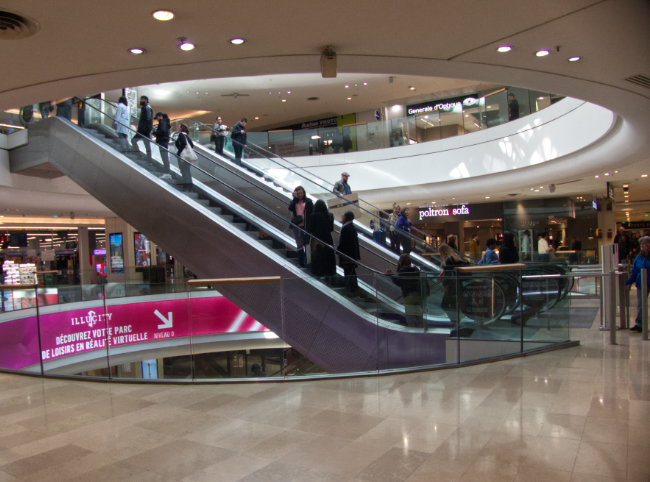
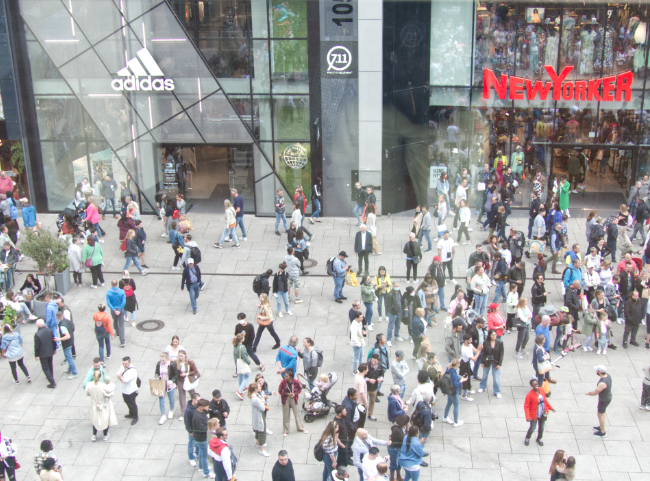
The most obvious place to explore the world of commodities is in supermarkets, shops, shopping centres. The large shopping centres have become ‘destinations’, part direct consumption, part ‘leisure’ experience, part pseudo-social space. These are global; from Westfield in Stratford and La Defence in Paris to Dubai Mall and many others. Entire streets and areas such as Bond Street in Mayfair, London have become shopping enclaves for the super-rich, a representation of a consumerist class division.

There are also the supermarkets and local shops and markets that we all use. Everything from the local Morrisons superstore and M&S and Coop and the range of shops in the localities where we live.
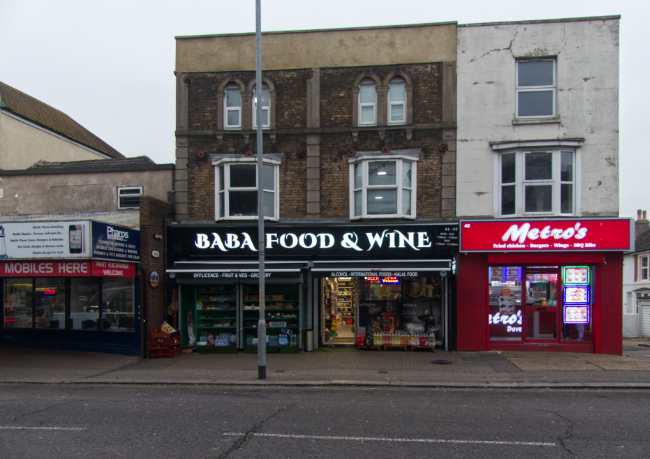
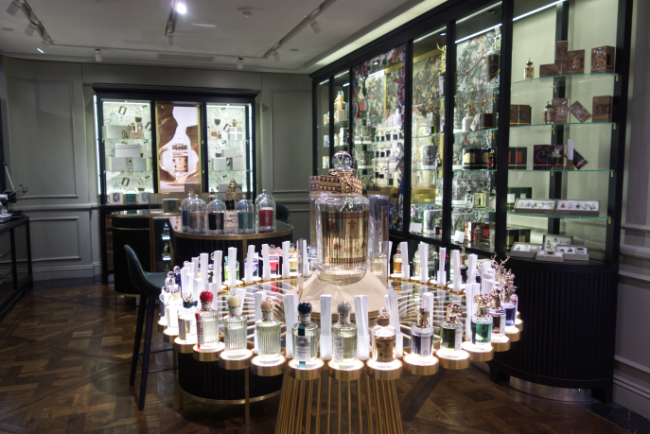
These are the end point of the selling of commodities. Here the commodities are surrounded by neon lights, smart sales people, attractive display counters, a certain ambiance, security guards, special offers, warmth and comfort.
It is not just that these commodity-image-objects are confined to the shops; Fairy liquid, Levi jeans, MacBooks, iPhones, Mars bars, Domestos bleach, Nutella, Coca Cola, Nike trainers, Prada handbags, Heinz baked beans, Coleman’s mustard…and on and on and on. They fill our living spaces, living rooms, kitchens, bedrooms, hallways, gardens, sheds, cupboards under the stairs.
They fill our workplaces; certain brands of tea and coffee in the staff kitchens, Dell monitors, Cisco networks, Microsoft software. We wear TM Lewin suits, branded trainers, Gant chinos, Mango skirts, Uniqlo t-shirts, Ecco shoes, Happy Socks.
On the commuter trains we read books published by Penguin and Faber&Faber, listen to music through Sony and Bose headphones.
The commodity-image-objects form the physical background to much of what is perceived of as reality.
Into the streets we go, reeling with this domination of commodity-image-object production. The streets are filled with cars made by Ford, Volkswagen, Audi, Honda, Skoda; motorbikes made by BMW and Kawasaki.
Houses have been turned into commodities; to be bought and sold, to be rented out, to be left empty to incur favourable tax incentives. Energy in the form of electricity and gas is bought and sold as a commodity. It is irrelevant how cold it is or how much an elderly person needs warmth and light. These things are not supplied with the primary purpose of satisfying human needs; the primary purpose is profit and the further accumulation of capital.
There is one further aspect of commodity production that must be considered. It is not just that objects, the means of life, are produced as commodities. The very production of commodities turns human labour (that means human life) into a commodity. We, the workers, find our life-force, the actions of our hands and brains, our heartbeats, are coerced from our sense of self and turned into a commodity form. Our labour, the ability to be consciously creative, becomes a commodity and the property of someone else. What it means to be human is torn away from the very humans themselves and becomes a commodity relationship formed in the tension between opposing classes.
And so the capitalist mode of production dominates all. The bus drivers sell their labour as a commodity, the barbers and hairdressers, the shop assistants, the building workers, the nurses, the warehouse workers, the eighteen percent of the global workforce that works in manufacturing, the people who stand by furnaces pouring molten metals, the delivery drivers, the office workers, the singer in a band, the post office workers, the seafarers on the ships in the Channel, the workers in the loading bays of the shopping centres; they are all selling their labour power as a commodity.
Perhaps not the singer in a band. It might depend on context. But you get the general idea.
And then the reason for starting with the commodity becomes complete. The mode of production is dominated by the production of commodity-image-objects. The reality we live within is dominated by commodity-image-objects. We must work to stay alive and most of us can only work by selling our labour-power as a commodity.
I was in central London having just finished talking about Red Vienna for the London Socialists Historian Group at the Institute of Historical Research. It was a packed and lively meeting. I enjoyed it a great deal and learned so much. At the end two young women stayed for an age discussing politics. In those moments life becomes alive. I walked out into the London night and calculated I would probably have enough time to pop into Waitrose in the Brunswick Centre to get some shopping before I caught the train home. I waited in a queue.
And then it was my turn at the check out. The cashier robotically moved the items from the conveyer belt and scanned the barcodes. Then she placed them on the area where I could collect them to pack. The same repetitive movements until my line of shopping was completed.
She asked me if I have a Waitrose card. She must ask this a thousand times a week or more. The exact same words. She then pressed a button on the screen – have you ever really noticed what the cashier is doing at this point?- and my receipt was printed. She handed it to me as she hands a hundred thousand receipts to consumers over the course of weeks and months and years. Perhaps all she is really thinking about is how much she will be paid this week and whether it will be enough to pay the bills. Price, income, wages, profit. Commodity production. Labour power. These are key elements of Marx’s book on Capital.
The last item to be packed into my rucksack is a pack of butter.
‘You’ve got to have butter’, I say, trying to justify this.
‘Well, milk’, she says, ‘first it’s bad to have cow’s milk and then it’s oat milk and almond milk and all sorts of stuff, and now they say that’s not good for you and you’re better off with cow’s milk’.
‘I just ignore all that stuff’, I say, ‘how can you have toast without butter? It’s ridiculous’.
She’s one of those people who doesn’t look as if she smiles easily but I get the sense that this has cheered her up a bit at 8.30pm on a cold February evening.
And then as I walk out in the night of Bloomsbury it clicks.
She is selling her labour power; her very life form has been turned into the commodity form and from that into the value-form.
And that value-form is an abstraction, something independent from the commodity-image-object itself. And yet all that value isn’t shared out fairly and equitably. And there is as much a spiritual immiseration as social and physical.
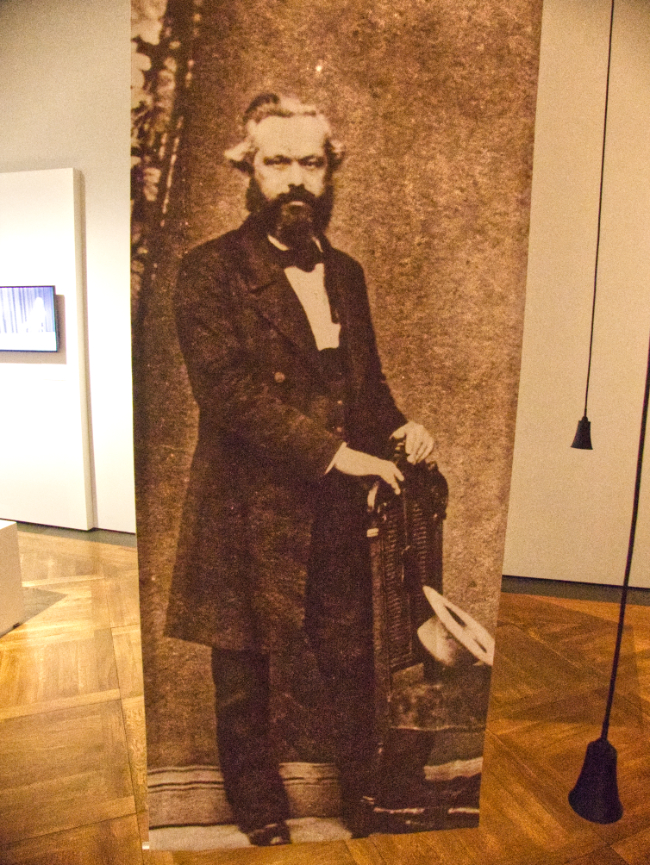
 Commodity Fetishism
You must be logged in to post a comment.