
A woman in a trim blue padded coat stopped and asked if she could help. Blond hair blew in whisps across her face. She was all smiles and sparkly eyes. I was standing at a road junction near the railway station at Shepherdswell studying an Ordnance Survey map. I looked at her over the top of my glasses. I have that sort of vision.
‘I just want to make sure that I put the right foot forward. And that way I shan’t get lost’.
‘Are you going to see the church?’
‘I will do’, I replied. She smiled even more. We exchanged comments about the weather and off she went. Sparkling is infectious. My feet felt lighter for some time afterwards.

I walked past the church on the way to the footpath that would take me out of the village. All very English with the gravestones, yew trees and primroses and the sound of a hymn being sung loudly and with pleasing harmony.
The right would shout to claim this for their own; but there are plenty of socialists, progressives and radicals who like this stuff too. It’s the left who care for the people and places of England; old buildings, the countryside, the tales that people tell. And who find traces and histories of England’s radical histories within such spheres. It’s capitalist developers who tear it down.
And then I’m out of the village and I can feel the fresh air and sense the size and blue of the sky. As yet there are no buds on the trees or hedges. It feels as if it’s the very last day of winter and that tomorrow the blanket of fog and rain and cold will be tugged briskly off the sleeping earth and the carnival of spring will start.
I’ve been reading Capital as part of a group. We’re currently on chapters seven The Rate of Surplus Value and the early pages of chapter eight The Working Day. I must admit to finding Marx’s baroque equations and formulas in The Rate of Surplus Value difficult to comprehend. There is an anecdote about William Morris reading Capital and emitting loud groans. I’m sure it was when he reached this point.
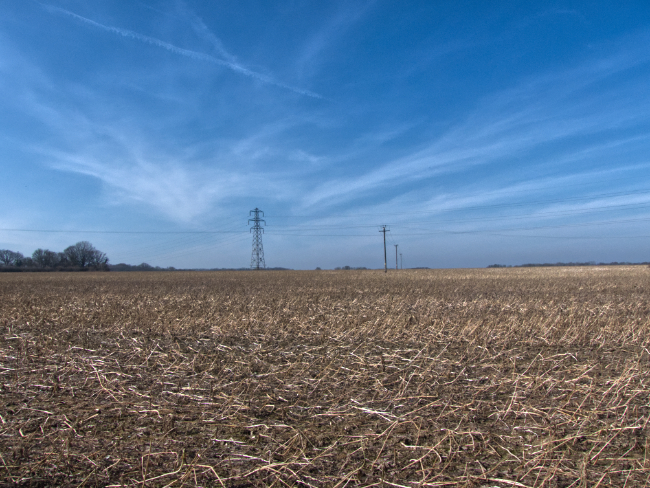
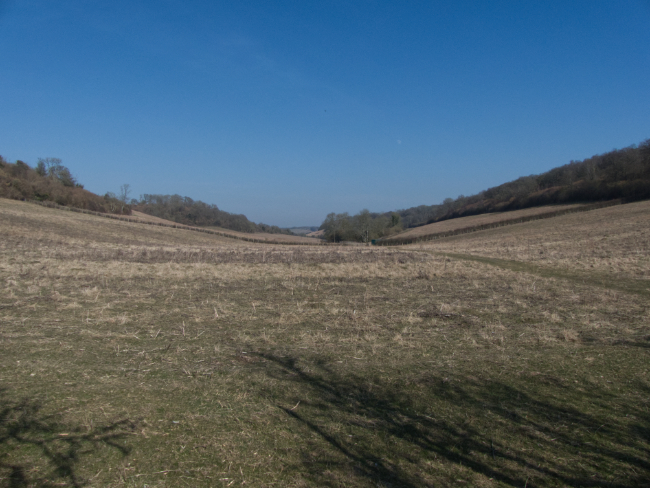
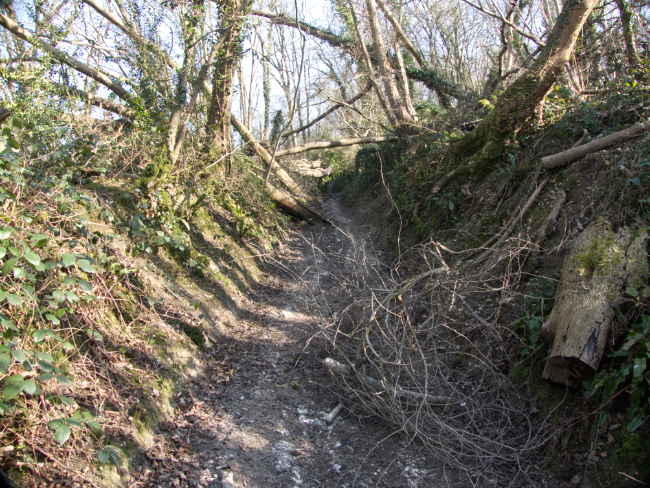
I like books to be alive and wondered if Marx’s ideas could be found in the English countryside. I’m walking through farming country. Across ancient tracks and paths by the side of productive fields.
There are around 100,000 farms in England producing 60 percent of the country’s food. 285,000 people work in the agricultural sector of whom 66,000 are regular workers, and 48,000 casual labourers. The other 176,000 are ‘farmers, business partners and directors’.
Marx spends a considerable amount of effort in volume one of Capital describing the changes in agriculture, the power and interests of the landlords and the impoverishment of the agricultural workers through the increasing capitalisation of the industry.
He argues that the origins of capitalist farming are in the fourteenth century and that there is an industrial revolution in agriculture in the eighteenth century. From the 1780s onwards there is an increasing pauperisation of the agricultural workers and more and more these workers are dispossed of their livelihoods, their cottages and common rights. Wages of agricultural labourers began to fall, in fact were driven down, so much that their meagre incomes had to be supplemented by the Poor Law.
The mass of people affected in this way – the majority of the people of England – had no formal democratic rights. For centuries Parliament was the legislative power of the landed aristocracy. 50,000 might not vote and yet a constituency of two people might elect an autocratic MP. The power of the aristocratic landlords and the power of the government were essentially the same thing.
From the 1760s onwards a varied number of productive processes were industrialised, particularly in the textile industries. Steam engines were developed and new techniques applied to way that human labour worked on raw materials.
This industrial revolution, the impact of the French revolutionary wars, the growth of towns, increasing global commerce (including the slave trade) began to create a new working class, a class that made it itself, that appeared at its own birth.
This was a class of workers who read Thomas Paine’s The Rights of Man and John Bunyan’s The Pilgrim’s Progress. There was a sense that ancient rights, custom and practice, habits, ways of life were being pushed aside, all in the interests of money, the large landlords and the emerging capitalists.
From the beginning of the nineteenth century, political opposition from below took the form of riots, hay rick burning, crop spoiling, cattle mutilation, machine breaking and on occasion, desperate groups of labourers accosting individual farmers with pleas for food and work. These tides and currents from below were met by imprisonment, executions and transportation.
And despite the newly forged industrial riches, Marx quotes a Privy Council investigation of 1863 which estimated that 20 – 30 percent of agricultural workers and their families never had enough to eat. Even a Tory or two conceeded that prisoners were often better fed.

Marx described these historical changes and how a sense of being ‘well-off’ , measured in pints of wheat, deteriorated.
“And yet, English agricultural workers were comparatively well off from 1770 to 1780. With respect to how much they consumed, their housing, and their sense of self and sources of amusement, their circumstance represent an ideal that hasn’t been attained since then. Expressed as pints of wheat, their average wage amounted to 90 in 1770 – 71 but only 65 in Eden’s day (1797), and to just 60 pints in 1808” – 1
Marx can be obtuse at times but also highly skilled in moving from Hegelian influenced abstractions to the practical realities of daily life.
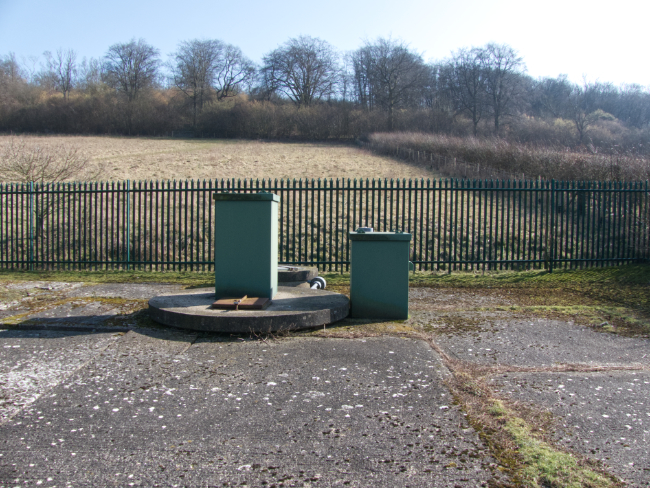
I continue to walk and pay idle interest to the artefacts of infrastructure. Electrical pylons, water towers, electricity sub-stations, steel covers of drainage and water systems.
By the side of a field, and next to a scrub of trees, stands a trailer with sacks of seeds and fertilizers. I stopped there for a while and watched a tractor sowing seeds.

Now let’s assume that the seeds being sown are wheat.
Wheat can be used in multiple ways, it has multiple use values. It’s a raw material to be milled into flour, used as a foodstuff for bread, cakes, pastries, biscuits, pasta. Wheat germ is a health supplement, wheat bran is added to animal feed. Malt extract is used in brewing beer and blended whiskeys. Starch is refined and used to thicken soup and baby foods. Wheat starch is used in biodegradable plastics, glue, wallpaper paste and the manufacture of paper.
Modified wheat starch is used to stiffen fabrics. Wheatgerm oil is used in skin moisturisers. Wheat protiens are added to conditioners and shampoos. Wheat starch is used as a binder for pharmaceutical tablets. Gluten-derived hydrocolloids are used in drug formulations and controlled-release medications. Grain also acts as the seed of more grain. It is ‘the raw material needed to produce itself’. 2

But the reason the farmer is growing wheat is not because the farmer is making shampoo or pharmaceutical tablets or skin moisturisers for personal consumption. The farmer is growing wheat because they want to realise the value through exchange. The farmer’s real business is not in growing plants, but money.
To produce this wheat, the farmer needs means of production. Land and seed as raw materials, the fertilizers and insectisides and fungicides as auxiliary materials. Tractors and sowing machines and combine harvesters as the instruments of production; and most of all, labour-power.
The land, seed, fertilizers, insectisides, fungicides, tractors, sowing machines and combine harvesters represent things which have already been created, by earlier labour in a different time and place. Marx describes this as ‘dead labour’.
They collectively represent a capital investment but can only be brought into motion, brought together in the necessary combinations, moved, lifted and shifted, by living labour. That’s what the farm worker represents; all over the world, in rice-fields and orchards, fields of maize and cassava, tea plantations and coconut groves. Labour is the life source which makes the sowing, growing, harvesting and distribution possible.
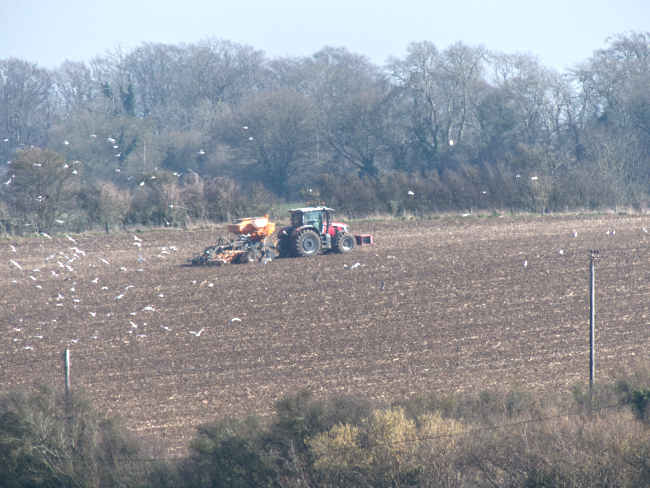
In the field, inside the tractor, the labour-power is being applied in a practical way, second by second. The foot on the pedal to maintain a certain speed, the hands on the steering wheel making constant small adjustments as the front wheels are twisted and turned by the weight of the soil; human senses judging distance and the coverage of the seeds being sprayed.
The application of the labour-power is a physical, practical, conscious activity, planned in advance, thought through, with the purpose of realising certain aims and objectives (namely, to grow a crop for its use-value and to realise its value through exchange value). That is, the crop is a useful thing (we all need to eat) but through its sale, it can generate a money-profit for the owner of the land.
It is not visible to the naked eye, but what’s going on as the tractor is driven across the fields, is the law of commodity exchange. Labour-power, provided by the driver, is a commodity, but unlike any other commodity, when it’s consumed (by the capitalist in the process of production) it creates value (‘more value than it costs’)2. It is this application of living labour that is creating a surplus value, and that surplus value will become the profit. How does this work?
There is time to do some back of the envelope calculations (helped by ChatGPT) while watching this work in progress.

Let’s assume that the field is 100 acres in size. The volume of the wheat produced might be 350 tonnes which could sell for £65,000. The average wage for a grade 6 agricultural worker is £25,000 a year. A little over £10 an hour.
To plough, sow and harvest the field might take 50 hours. At £10 an hour that’s £500. It is clear that a much bigger amount of money is being created for the farmer than is being paid to the labourer.
This is a crude calculation; the farm worker is paid over a year, not just for 50 hours work, but the basic principle is what matters here.
There are also other costs; the tractor, machinery, fuel and lubrication, seeds, fertilizers, fungicides, insecticides, microbial additives, rent or mortgage costs, computers, software, databases, insurance, drainage, fencing, bird scarers. But this is by no means going to eat up that £65,000.
And farming is an unusual industry in that key factors of production, sunshine and rainfall, come for free (these are not requirements for making steel or drilling oil).

Marx uses an example of wheat production to more or less say the same thing, but using figures from William Jacob’s work A Letter to Samuel Whitbread, being a sequel to considerations on the production required by British agriculture London 1815:
“Amount of value produced per acre:
Wheat £1, 9 shillings
Fertilizer £2, 10 shillings
Wages £3, 10 shillings
Total £7, 9 shillings
Tithes, rates, taxes £1, 1 shilling
Rents £1, 8 shillings
Leaseholders profits £1, 2 shillings
Total £3, 11 shillings
The £3 19 shillings spent on seed and fertilizer is the constant capital, which we set at zero. What remains is the variable capital, the £3 10 shillings that the capitalist advanced for labour power”3
Marx quotes Léonce Guilhaud de Lavergne, a French economist, agronomist and politician who claimed that English agricultural workers received ‘only a quarter of the product, or its value, while the capitalist farmer gets three quarters.’ 4
Marx disagrees with Lavergne and suggests that the rate of exploitation is actually 300 percent. But you can see that ideas are aligning. And that regardless of the change in sums of money, there is exploitation here, and a combination of outgoings by the farmer that somehow results in a greater sum of money in return than is originally advanced. And that dynamic continues in all wheat production in England today; in fact in all global wheat production.

What is the figure of the rate of exploitation today? It is difficult to get accurate figures for the wages of agricultural workers, either full time and permanent, or casual. But it would be possible to work out all the financial inputs and outgoings; and then that figure of the rate of exploitation could be determined. And if that figure can be determined, then so too, the rate of profit.
The rate of exploitation however is not just reducible to a money-price. There is a social dynamic to this which is wrapped around with culture, psychology, ideology, kidology and much else. Is the rate of exploitation today higher or lower than in the 1850s? And not just in agriculture, but in any job?
But how many people can explain what the rate of exploitation is that they experience when they sell their labour? It seems almost as if this figure is deliberately hidden. It would be useful to know. It could be added to the advertisement for all jobs. And then both capitalists and workers would know exactly where they stood in relation to each other.
Much has changed since the middle of the nineteenth century. In England there is still deep and grim poverty for several million people; but the general standard of living is higher. People live longer, and despite poor personal experiences and depressing cutbacks, health provision, education and housing are all more advanced and generally of higher quality.
But £10 an hour isn’t really much at all. And there’s a housing crisis across the countryside that may not be as visible as urban slums, but causing a great deal of anxiety and hardship for people who experience it. Do people feel better off?
And how does daily life feel to people, and what is it like to work, and what are the relations of production like? An individual boss who may be ok, but might be a rotten, childish, aggressive bully and then the worker never gets a minutes peace, even when not working, from the psychic and emotional pressure. These are real things too.
Marx also develops his ideas in a more general form including the relationship of human society to nature, the application of human power to natural resources.
The application of human labour power to natural resources is a process of metabolization for both the raw material and the human. It is acts of human labour power that create raw materials in the first place. Ore in the ground only becomes a raw material when it is mined. A tree only becomes a raw material when it is felled.
This metabolization is a unity of raw material, finished materials and labour-power and changes both the material and the human. How we work and use our head, hands, heart and humour, and what we make and why, help determine our human creatureliness, our consciousness, our ideas, our psychic integrity, our position in time and space.
If this process is controlled by the capitalist in the interest of the capitalist then a certain type of person will be grown. One whose life force is controlled by another, where the social relations are a domination of exploitation and oppression. This is not a true realisation of consciousness and the luxury senses, but a distortion and a trap.
If the process is controlled by the producers, in the interests of all (including those who are unable to directly produce) then our very activity becomes an expression of life, a means for social and personal development, a way to fully use and appreciate the luxury senses
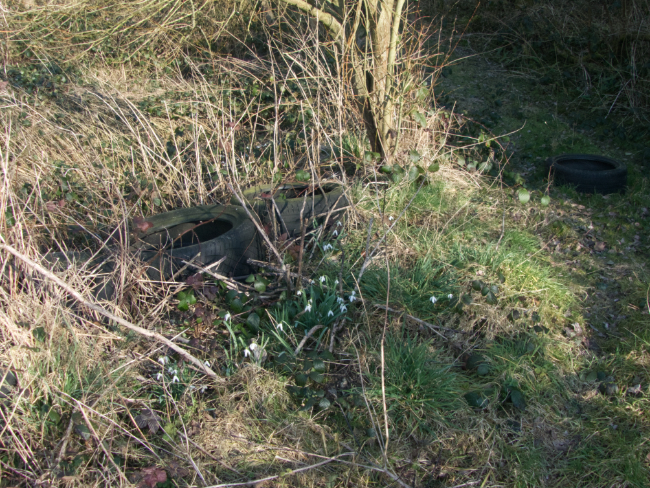
Marx identifies a yet deeper problem; that of human production in general and the health and viability of the earth itself, nature, the natural resources, the world we live in. He argues that:
“capitalist production…disrupts the metabolizing that goes on between human beings and the earth. The natural elements that people consume as food and clothing can no longer return to the land; hence capitalist production undermines the eternal natural conditions of the earth’s lasting fertility, thereby ruining the physical health of the urban worker and the intellectual life of the rural one.” 5
“Moreover, every advance made by capitalist agriculture is an advance not only the art of stealing from the workers, but also in the art of stealing from the soil” 6

In this, Marx outlines how capitalist production in agriculture not only distorts and oppresses the human, but it is fundamentally damaging and ultimately dangerous to the earth itself.
Sowing seeds is one of the world’s great metaphors. Seeds are needed for life itself; and if we wish to maintain life on earth, a great number of seeds of certain sorts must be sown.
The atmosphere of the world is filling up with a poison from the dog breath of the dictators and billionaires. Poison cannot be fought with poision. The antidote must be forces that breath the fresh invigorating air of freedom and give life.
The force of revolutionary ideas, rebellion, resistance, hope; and organization from below.

Published Sat 22 March 2025
All the references are to the new translation of Capital by Paul Reitter
 Commodity Fetishism
You must be logged in to post a comment.