
The alarm is set but I wake up an hour before it rings. This gives more time for breakfast, double-checking that passport, tickets, euros, notebooks, pens, headphones, cameras are all in place.
I might as well leave early rather than idle around at home. It will be interesting to see the port wake up; not that it ever really sleeps. A lorry from Razgrad passes on the main road. It’s a town of 33,000 people in northern Bulgaria. I wonder what they make that is then exported?
The first check-in is at the reception desk for foot passengers. We exchange notes about the recent TV series about the port. We agree that there is a good television programme that could be made, and that there’s a good story here. But it wasn’t this ridiculous advertorial.
The police in particular came across as buffoonish, arrogant and full of their own self-importance. In one piece of film they are up on the Western Heights. ‘Anyone could be up here doing surveillance’. Really? Yes, there are people up there with large telescopic cameras taking pictures of refugees crossing the Channel in small boats.
This isn’t mentioned.
In another act of melodrama the police spot two people in the water under the cliff on a relatively stormy day.
‘The cliff could collapse at any moment!’
And they race their van along the harbour arm.
The two men in the water turn out to be surfers and they are non-plussed at the potential cliff collapse.
There’s nothing we can do’, the police say.
Later we see another two cops driving around looking for a Greggs and they exchange unfunny banter about sausage rolls.
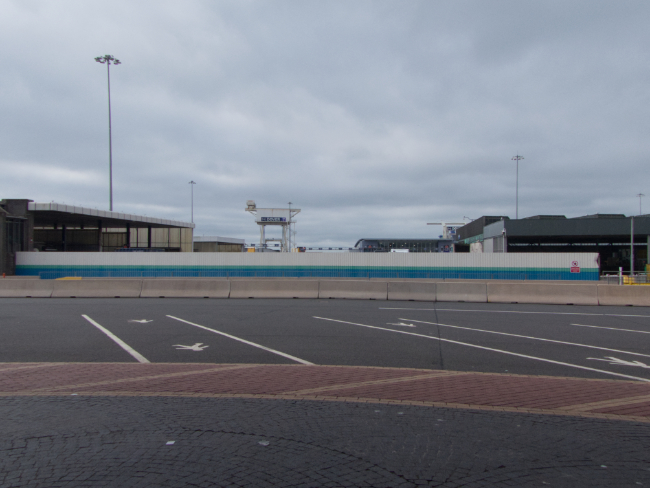
I sit outside the reception area watching the sea gulls, a ship docking, various workers in blue, yellow or orange overalls. The port is much dirtier, grimier and smeared with oil than the sanitised television version. The closer ‘reality’ television tries to get to real life, the further away it then becomes.
A few days ago I bumped into a neighbour in a supermarket. I explained I was about to go to France and the Netherlands on the ferry and the train.
‘Good boy’, she said, ‘that’s the way to do it’.
Then I remembered that she can speak Czech and I asked her how to pronounce Karel Teige, a Marxist, writer and member of the cultural avant garde in Czechoslovakia before, during and after the Second World War. He died in 1951, suffering acute nervous exhaustion, partly brought on by his Trotskyist opposition to Stalinism.
She spells out his name in Czech and tells me to come and see her when I return. She would like to see my photographs and she thinks she might have a book by Teige.

A lorry is reversing into a large custom shed. More checks.
Sea gulls are yelling and screeching. One squawks and then another repeats it. They do this for some time. It’s a form of communication.
I say good morning to the fellow foot passengers. Most respond. One seems sour; I put everyone like that into the Reform camp. There’s an unpleasant hubris about some people in England now. And yet it often seems to come from people who are relatively better off than the poorer layers.
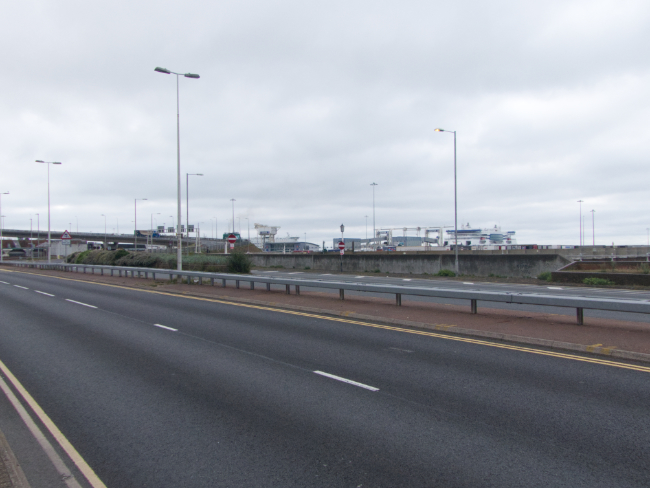
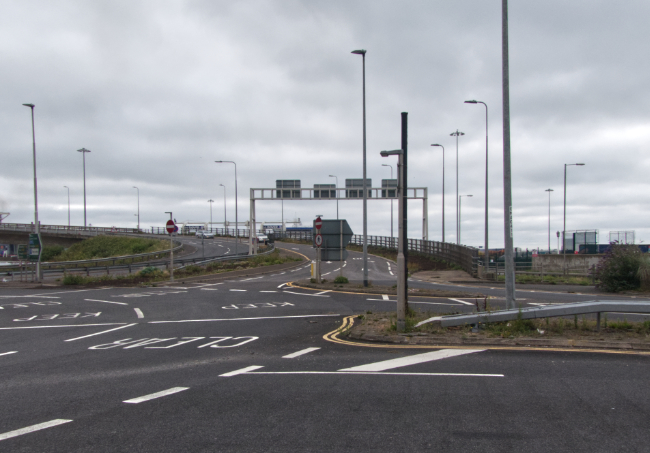
The infrastructure of the port if built with machine precision. Sheds, metal walls, mobile phone masts, signs for exit and entrance, passport control booths. Everyone is counted in and counted out.
The bus arrives. A rough looking man has suddenly turned up and without any sense of manners announces that he wants to buy a ticket.
Going through customs is like approaching the confession box of the Catholic church. Why am I feeling guilty? What does the state know about me? What does the state know about the other people on this bus? Who am I tangled up with?
It is worth being polite with passport control. We are waved through the British part. And then we all have to get off the bus but without our luggage.
A young French woman in a yellow high viz jacket with POLICE written on it in large letters checks my passport and puts yet another stamp inside it. When she turns to give it back I realise that she really doesn’t look as if she is anything to do with ‘the police’. She has the air, at least to me, of having been planted in this position for the making of a Jean Luc Godard film, from beyond the grave. It’s the sort of thing Luc Godard excels at.
Then we all get back on the bus. Then we drive into a shed for security control and checking. Large bags are put on to the roller-conveyor belt. Smaller bags, jackets and belts into plastic trays. Two people are patted down by security staff after they have been through the metal detector gate. I’m not in the security business but if anyone had asked me I would have said they don’t look like any sort of threat to anyone.
One by one we are allowed back on to the bus. One of the port workers is talking to the driver. They are talking about shifts, length of the working day, overtime, rates of pay. This is the stuff of volume one of Capital.
‘It’s work to live’, the port worker says and the driver nods in agreement.
And then we are driven on to the ship.
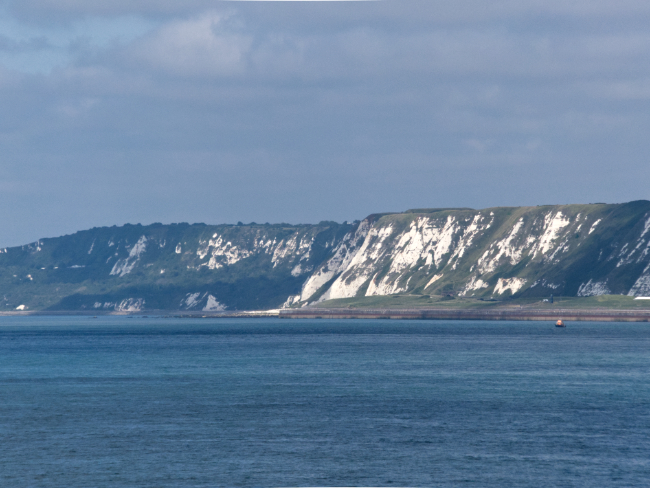
Once the ship starts to move from its berth I go out onto the deck. It’s a warm, calm day and I find a place near a life boat and away from the crowd. A man is leaning over the rail talking to someone loudly on a mobile phone. Then he starts smoking a cigarette. I move up to the rail to take some photographs and he steps back.
‘No, it’s ok’, I say, ‘you don’t need to move for me’.
He looks at me and says, ‘Twenty five years ago I came across the sea hiding underneath a lorry’.
He explained that he was originally from Kurdistan.
‘I have lived in same house in Britain for 15 years. My children have gone to the same school all that time. But back then, we had to move nine times, we had to move all the time’.
‘Fighting, always fighting’.
He talked about Saddam Hussein and Iran and Iraq.
‘It is all about oil’. He looked at me. I guess there was something within me that whole heartedly agreed with him. It wasn’t verbally stated but there was an intense sense of solidarity. Such a small moment, such great weight.

‘Our house was hit by a bomb and my mum and dad were both injured. They were lucky not to be killed. Then I thought I can’t stay here’.
We stood next to each other leaning on the rail of the ship looking out across the Channel. It was as if he was re-living that journey.
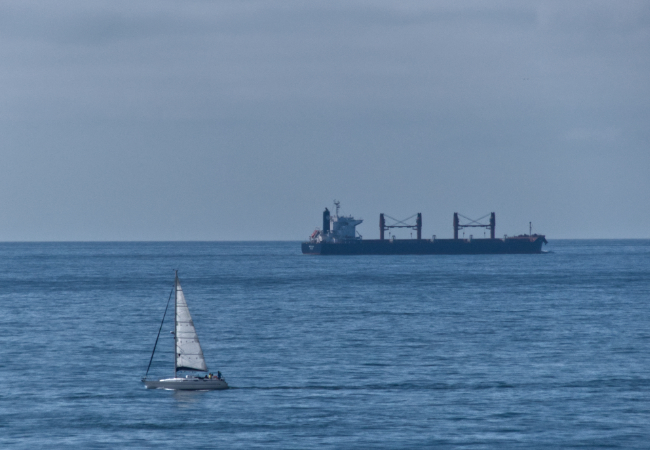
‘Once I was under the lorry I had no idea where I was or where it might go. But then I looked and realised everyone was driving on the left hand side of the road and I knew I was in England’.

His journey had included a long walk across Turkey, ‘it took eighteen days and most of it was done at night’. And then a ferry, and then more walking and then in Italy, and he caught a train to France.
‘All without a passport’.
‘I’ve worked hard in England’, he explained. ‘I’ve built up a business, I have a house, a car and my children, well one is training to be a surgeon and the other wants to be a lawyer’.

The funny thing was I felt closer to him, a greater affinity with him, than three Reform supporters I’d had a ‘discussion’ with a few weeks ago.
One turned out to be a Zionist – a genocide supporter. Another reminded me of the bad breath National Front types that Rock Against Racism and the Anti Nazi League put up so much effective opposition to.
And the third, when I got the better of him in the general argument announced that ‘I wasn’t English’. This may or may not be the case. But it’s the way he said it.

By contrast the Kurdish man I spent a slice of time with crossing the Channel was of the big world, not little England, he was of lived experienced, not a weird nostalgic fantasy.
He was philosophical in the way that only some one who has experienced bombs and war can be; unlike the layer of people who have never been anywhere near war but just can’t stop themselves from constantly remembering.
‘I must go back to my family’ he said. And he gave me the sort of handshake that won’t be easily forgotten for its warmth and camaraderie; his words will last even longer.
And then the ferry is slowing down as it runs alongside the coast of France. Two women from Vancouver are standing next to me and taking photographs. They are on a tour that will take them to Paris and Switzerland and Rome. They have never been to Europe before.

Then again, I have never been to Canada or Nigeria or many other places. They will be taken on a tour of Paris that will include the Eiffel Tower and the Arc de Triomphe. Yesterday they went to see Buckingham Palace and the Tower Castle as they described it. I thought that was an excellent name and shall re-use it.

The ship docks and the foot passengers wait by the reception area. Then we are led to the bus and driven off the ship and around the port.
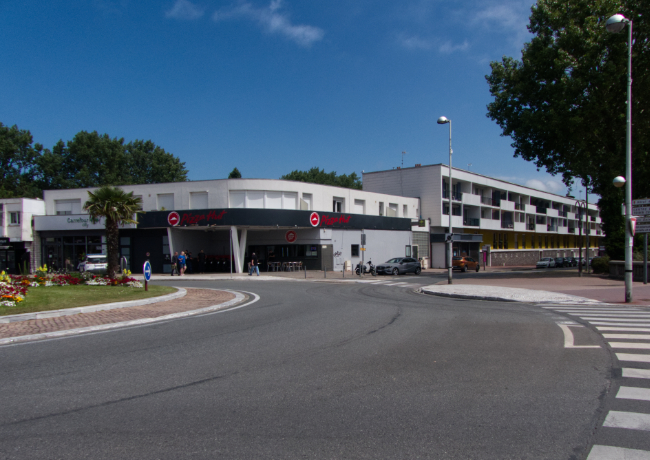
There’s no free bus to the centre of Calais today but the bus driver and some official agree we can be taken into town. We’re dropped at the railway station.

I go the patisserie near Carrefour and buy a baguette and a biscuit-cake with ‘Calais’ written on it with chocolate sauce.

And then I take the train to Lille Flanders and fall asleep, rocked by the carriages and the stream of soothing engine noise.

I drop my bags off at a cheap hotel near the station. There’s a lot of street stuff going on which I ignore. I sleep again and then go to have a look around the Lille I visited a few years ago. But that city no longer exists.
I cannot find it. Instead I find an older city, it’s more Flemish and Beaux-Arte and faded industrial than I remember. I get genuinely lost and disorientated. I lose my sense of direction and my sense of self.
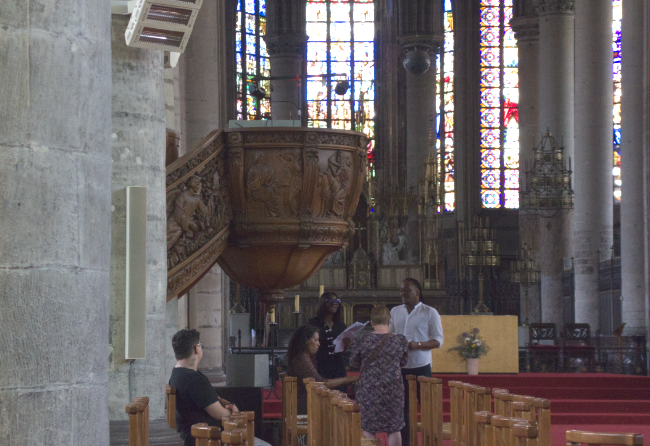
I take refuge in the Church of St Maurice where a small group of people are gathered around a pianist as they practice a song. It’s genuinely moving. Everyone who comes into the church sits down and listens. The sound fills the whole building. It’s magnetic and magical.
At one point as I walk through a back alley I glance up and a whole ancient Flemish city is revealed.
What do we ever really know?
 Commodity Fetishism
You must be logged in to post a comment.