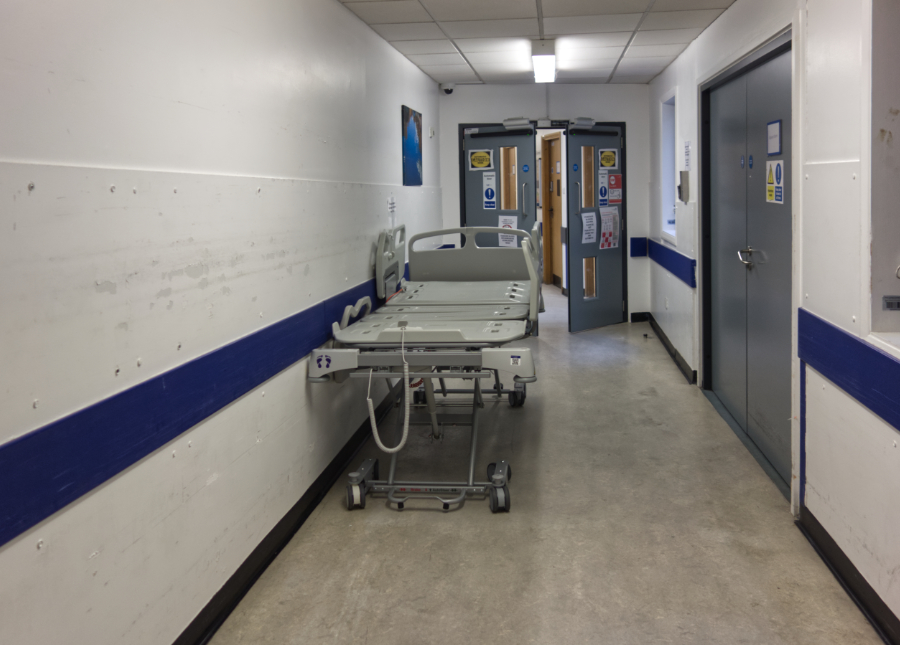
The nurse places her hand gently and firmly on the patient’s back. She pushes to help him stand up from his sitting position on the hospital bed. As she does so she holds his forearm to provide more support. He manages to rise half way and then drops back onto the bed.
“Let’s try again”, she says softly.
She places her hand firmly in the centre of his back and the procedure is repeated. This time he manages to stand. He is unsteady and almost falls towards the walking frame. Slowly, with great effort and determination, one foot with glacial pace in front of another.
The nurse walks with him, here and there an encouraging word, never any sense of hurry. And yet when she has to hurry she does, professionally and with care. To witness a scene like this is to experience something profoundly human. These are the human interfaces where life exists.
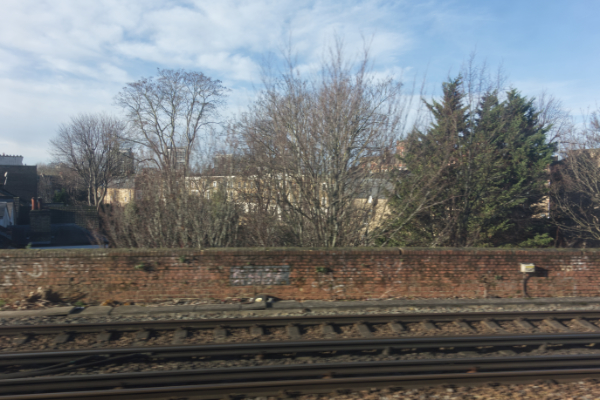
A dream that has left fragments of glass inside my head.
There were tents of homeless people and someone with coarse thick fingers, apparently a well-known concert pianist, sitting at a table inside a house. They suggested they would visit to play a recital.
I was wary; this was not my home. I felt to be there uninvited. The person who owned the house returned, I could hear her voice but she remained out of sight. I was trying to sort out objects that had spilled across the stairs. Needles, some with thread, a bag of clothes, a tin box with small back round marbles. They had been part of a game.
The game was this.
A large glass cabinet which contained half a dozen model towers. There were holes in the model towers and the marbles had to be sent through the holes. And then they sunk to the base of the cabinet.
This was in the first hours of the new year.
That same day the hospital filled up with a new cohort of patients. It is from the quotidian that the cancers emerge, the corrosion of nerve endings, the thickening of arteries and the bursting of veins, irregular heart beats and expansion of tumours.
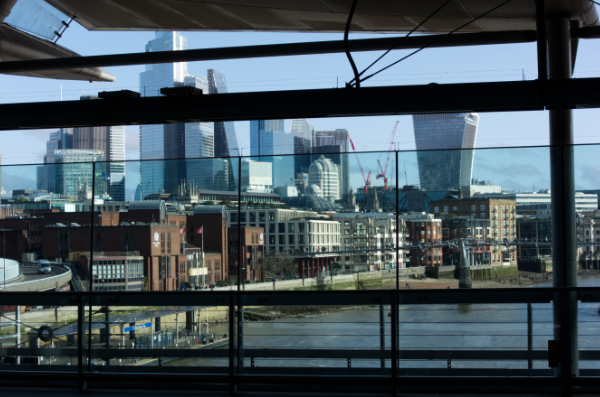
I took the train across London, magnificent in the morning sunshine. I could have become lost in the city, to walk without end, that’s when ideas seem to grow from the bricks and the tarmac on the pavements. This is when the shop windows and the baroque and gothic churches and the slab glass office blocks inspire without effort.
The Hamburg art museum director Alfred Litchwark suggested that style influences the norms and forms of daily life; how we perceive, the conscience of the eye.
Picture postcards and the emergence of the global image.
The people are a swirl of movements, the young women in their thick soled shoes and boots, here and there someone who has really got it; a woman with bright pink lipstick snarls at no one in particular. Or was it at me? It was so swift and almost undisclosed. And yet it made me feel that someone was very much alive.
The whole city, this immense urban landscape, the creation of billions of movements of hands, tools and machines; and yet few monuments to the dignity of labour. Without this human energy London would be a large marshy area with a wide river that floods on a regular basis, flowing to the Canvey Island delta.
There is no general encouragement to view the city through the starting point of work, labour and occupation; let alone exploitation, labour power, exchange value, surplus value and class relations.
Every single object in this city, from the smallest and most useless gaudy piece of plastic kitsch to the largest buildings are transformations of natural materials.
London is a product of technical change, and a node of the production of technical change. The history of cables, telephone exchanges, satellite connections, fibre optic networks is barely written.
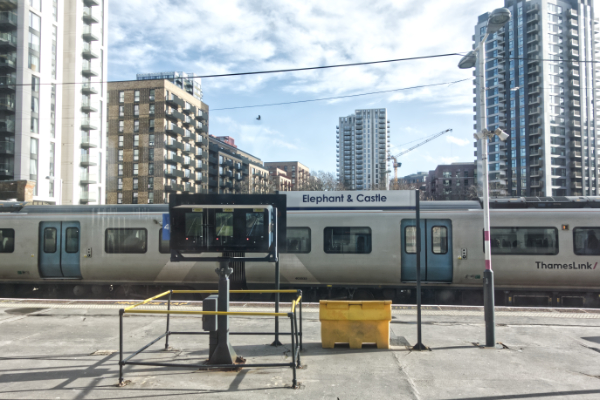
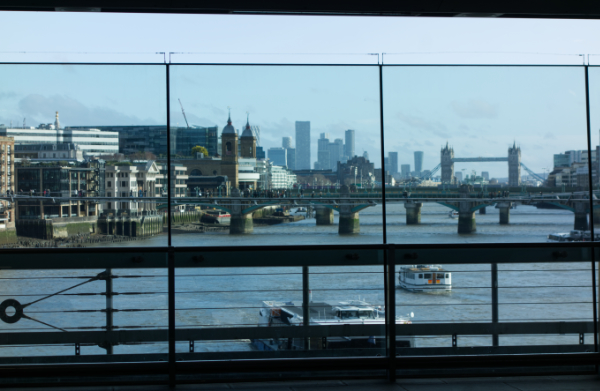
The train crosses the Thames at Blackfriars, Tower Bridge, St Paul’s, the City, Canary Wharf. London belongs to me; but does it? Global petro-dollar capital has been buying up the warehouses and dockland of Wapping, Limehouse and the Isle of Dogs.
Voices unheard.
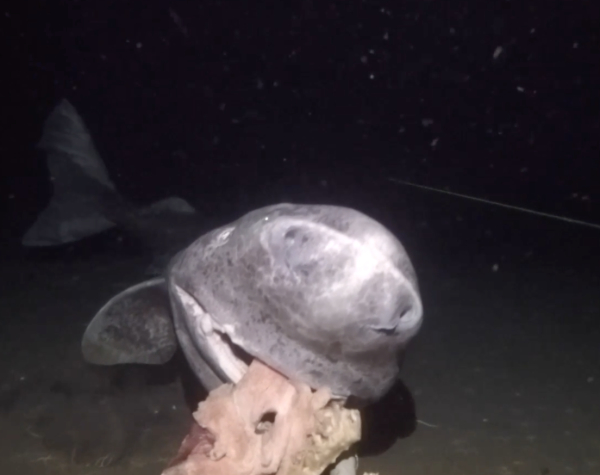
Dirty money pours through the holes and cracks, capital accumulates, flare ups of alienation, stars collide, shark predators on the deep depths of the North Atlantic; they eat raw meat, they know nothing of ethics, principles and morals, yet have a beauty of their own. And life; they too are life.
Over the viaducts of the railway complexity of South London. Scattered economic production, infrastructure projects, construction works. The new housing of mould and damp and vermin, cracks and fire-hazard cladding, management companies, leaseholds and excessive service charges.
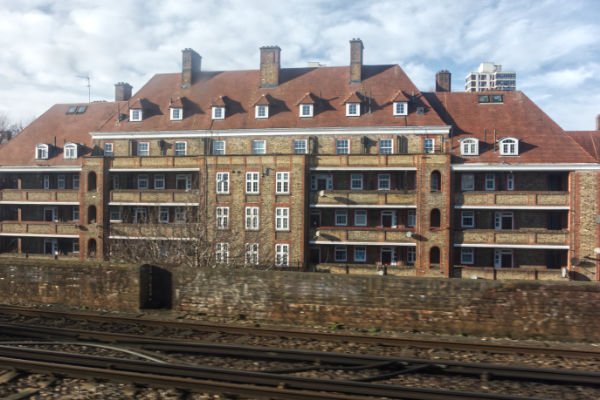
Here and there some remnants of the good quality low cost housing of the London County Council, Herbert Morrison’s mud pies, the optimism of the sixties in brick and play spaces. Now the housing is up in the sky and the blocks are too close together and entrances separated according to income and social class. Great flares of alienation, invisible and yet they burn.
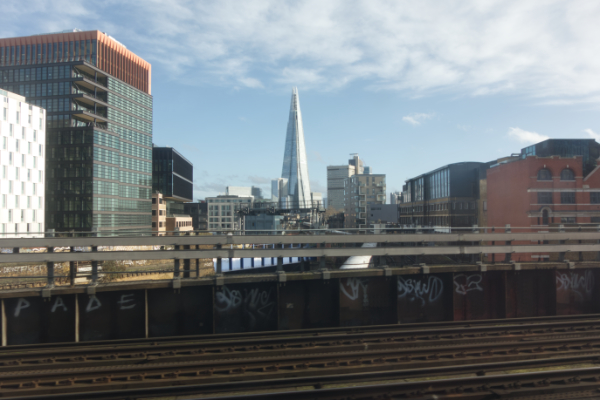
The domination of capital and exploitation prevents London from developing as the auratic city that it could become.
Right wing politics over time cannot create generalised urban aesthetics. The city does not belong to its denizens and therefore the relationship between the people struggling for freedom in the streets and workplaces cannot find real empathy with the private character of the glass, concrete, steel and stone.
All is based on nature but there is no naturalness to be found. Where are the art works to express this?
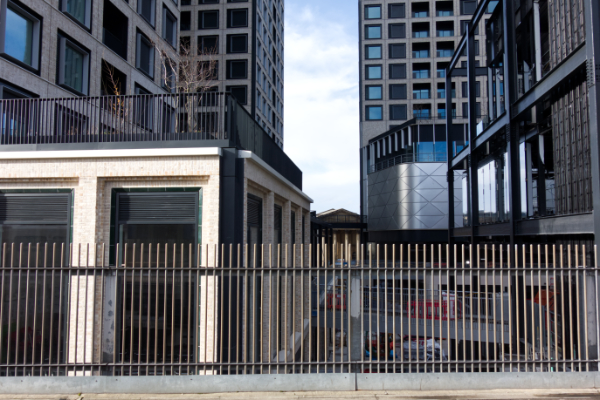
The city is a social-weather system of clouds, atmospheric pressures, heat and cold, light and dark. It is a stage without a perimeter, where thousands of plays are simultaneously enacted, all are both the audience and the cast.
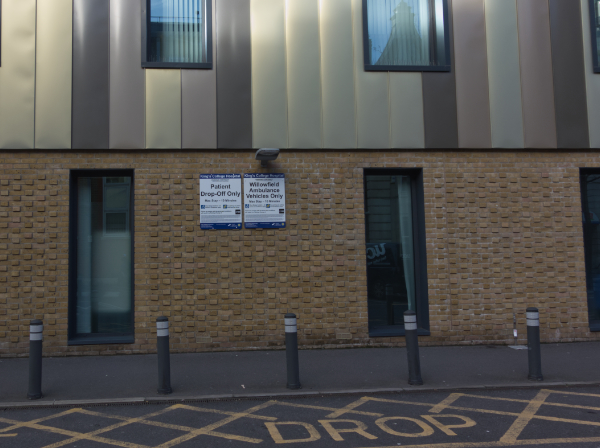
The notion of civic, municipality, even faint references to socialism are under siege by the new mantras of jobs, opportunity, community and sustainability.
Everything in the built environment must ensure it is buzzword compliant with the latest management fad. All buildings must serve the gods of capital.
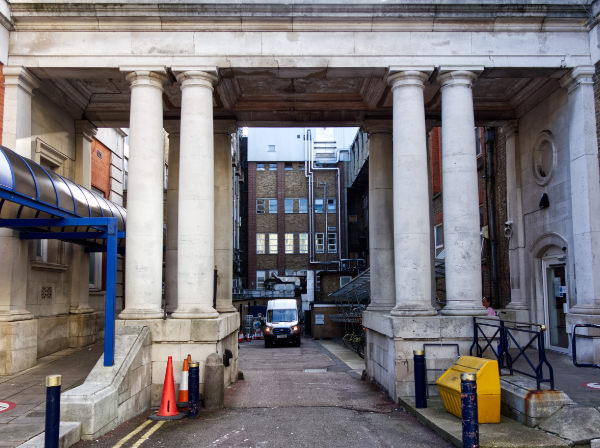
A man sits outside the hospital in a wheelchair wearing regulation issue pyjamas. With effort he smokes a cigarette.
Here humanity washes up, the great questions unanswered still. The detritus of human life scattered around the beds, so insignificant, so important; a book, a toy, a note of scribbled meanings, fragments of life once lived long ago.
Ego reduced to medical interventions, the hourly dispensation of drugs and medicines, technical modernist innovation, the monitoring of machines, updates to the database, graphs of life and death.
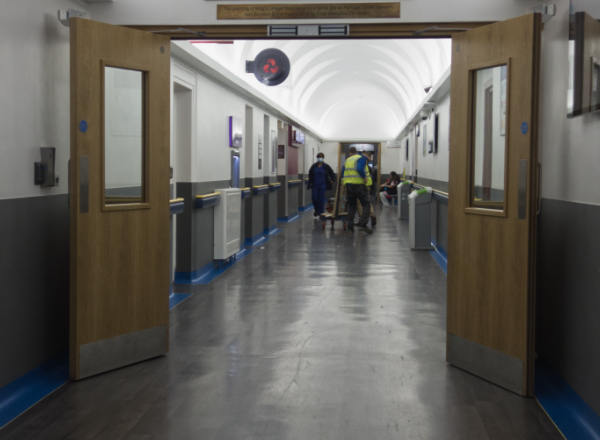
Into the reception area, along the first corridor.
A baby in a large cot on wheels is being pushed along the corridor by a team of medics. They look serious and determined. People stand back against the walls to let them pass.
In the operating theatre the surgeons and medical staff are ready. Everyone concentrates on saving the life of this child. The hospital is scuffed and scruffy.
A thousand years ago in my sixth incarnation I had a job that took me to the immense glass box office blocks on the Isle of Dogs. I would sometimes attend meetings in the KPMG offices at the top of One Canada Water.
London was so far away that it was impossible to make out individual people. Street level appeared to be covered in a brown-mud haze. If there were any discontents down there, so far below, their voices were never heard.
The inside of the lifts were of better quality than many people’s housing. Into the reception area, the meeting rooms with thick beige carpets. Water in opaque glass bottles with the corporate logo etched into them by the hands of an ancient guild of glass makers.
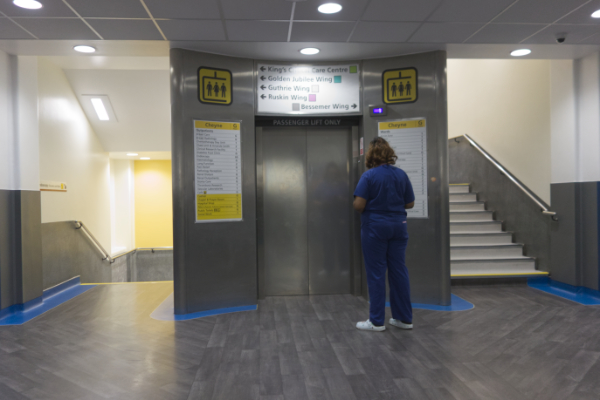
I pass a line of people in the ward. Tubes taped to their faces, drips in the arm, bandages, pain.
I say hello to a man who can barely raise a hand in response. He retains a solitary grandeur. He looks at me with eyes that might be helpless but they might too still be full of life. He is emaciated and weak. A heightened sense of reality contained by a blue curtain. Two nurses and a doctor pull it closed as they stand around the bed.

It’s visiting time. We sit around the patient’s bed in the atmosphere of a European art house film from 1965.
We talk in a semi-frivolous way, with series references to Peter Watkins film The War Game and Fourier’s The Theory of the Four Movements. Eating the patients grapes and biscuits. A meeting with the discharge nurse a conference call with social services. A list of questions and partial answers.
The patient lives nearby and asks if we can walk round to his flat to collect his wallet. The discharge nurse shows us some photographs of his room.
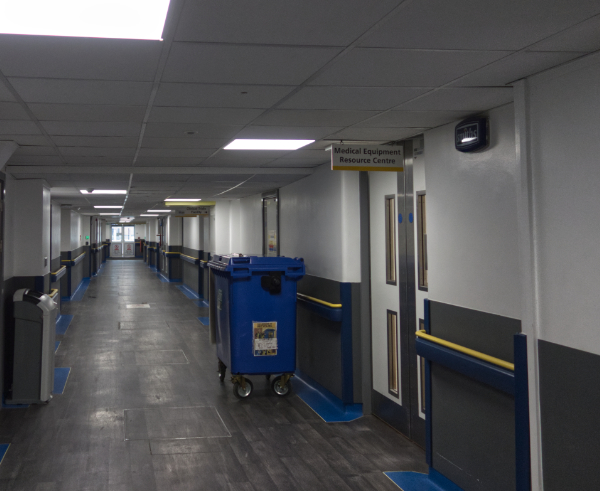
It’s good to be out in the street. The air in the hospital has been medicalised. The constant cleaning up of shit, piss, blood and vomit requires bleach, heavy duty cleaners. Here and there the body smells linger. We find the wallet and return.
It is late afternoon. It’s time to leave the hospital that never sleeps.
On the way out I stop to talk to the staff at the nurses station.
“There’s no window”, I say.
“When we’re here we have no idea what the weather is like outside. We don’t see the sun, the rain the daylight or anything”
How can a hospital be designed and built with rooms which lack daylight?
I dig around in my coat pocket and find the bag of caramel and nut chocolates that lie there and offer it across the reception desk. The nurse smiles in a generous way and takes one.
Red Rosa, it may seem impossible. But we still hope.
 Commodity Fetishism
You must be logged in to post a comment.