To arrive at Berlin Hauptbanhof on a train that started in London is to enter the epicentre of the 20th century. In the imagination can be conjured up the Kaiser and his entourage on horseback, decorated like Christmas trees, intrigue noted in scraps of paper that the courtiers hold.
Cheering crowds wave fragments of silk cloth at the young soldiers marching to the front lines; those crowds have dispersed as the young soldiers return. Here and there missing limbs, blinded, gassed, faces distorted with shell-shock, shaking bodies, shattered minds, dreams of revolution and violence. Red flags in the Alexanderplatz, inchoate crowds swirl and eddying, the droplets that make up the waves, the waves that crash against the shores of bureaucracies and state ministries. The waves are powerful but the energy is absorbed. Now there is stalemate, and then defeat.
Armed cars and machine guns, hopeless attempts at uprisings, strikes, factory occupations, red paint makes crosses on the doors of the bourgeoisie, the return of the Vhem. Soviets of workers, soldiers and sailors; endless revolutionary meetings of strategy and tactics, armed guards in the streets.
In the junkyards and basements artistic freaks crawl through tunnels and scale the walls of imperial buildings. On the rooftops strange seances where the past is being exorcised. Bright flashes of colour, discordant sounds, the new objectivity emerges in the spaces where the stars burn as they fall to earth.
Dark creatures in the swamp lands, they gurgle mud and spit out flesh eating poison. They gather round piles of burning books, evil visions, psychotic eyes, blood dribbles from their mouths, they live by eating broken glass. They dip their hands into fluid mercury to strip away the skin.
“On 14 March, a Sunday, it was possible to judge the ardour and the scope of their resistance. One after another the trains ceased to move. By five o’clock in the evening, there were in Berlin no trams, no water, no electricity”
‘Nothing moved in Berlin where the Regime could not get a single poster printed”
‘The general strike now grips them with its terrible, silent power” wrote the Belgian socialist, Louis de Brouckère.
Notes from Pierre Broue’s History of the German Revolution on the defeat of the Kapp Putsch by a general strike; amongst the leadership of the workers, Carl Legien who was on the right-wing of the proletarian movement in Berlin.
By chance it’s the 14th of March when I walk through Berlin. A serendipity unexpected.
The newspapers are full of the election results. There has been a surge in voting for both the Communists and the National Socialists. It’s just the newspaper reports. This stuff quickly passes. Last year it was the threat of floods.
The mysterious entity ‘the people’ pour out of the Berlin Hauptbanhof and the U-Bahn and S-Bahn stations and the buses to the offices and department stores and workshops. Does she like me? I like being in her company, she’s funny. Will the boss be in one of his moods today? I’m tired with all these politics. Is it really socialism in Russia? Are these stories about arrests really true? The flat is too small but we can’t afford another. Those people next door! I don’t really understand what happened in Kronstadt.
Germany is a great cauldron, a witches brew being painted by Hans Baldung Grien. Eighty million people being stirred in a pot. Will the contents be stirred to the left or to the right? Who has the stronger hands?
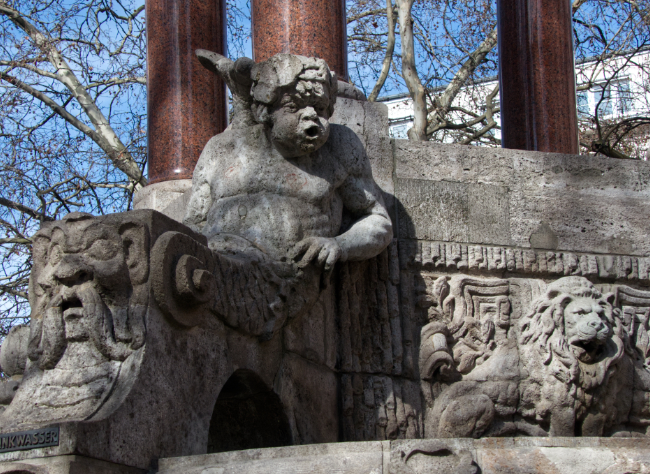
Every day the coal miners are digging more coal, the blast furnaces produce more steel, the factories always churning out more stuff. All these inventions! Now its motor cars and radios and machines to read the messages of the heart; one hundred beats a minute. You need to eat less fat.
On the train to Berlin the country seems to peaceful but here and there more flags are appearing. Foul breath people with reptilian skin. They have no humour but laugh at misfortune. In the woods there are corpses of the boy soldiers. War seemed such a glorious dream but this one died screaming when all his blood drained away through the machine gun bullet holes, and this one had his head clean blown off. Now we all know what brains look like. Frogspawn on the new grass of springtime.
A moment was remembered from some other time; as if it was yesterday. A bunch of flowers, the surprise, the laughter, the sun shining through the open door. His mother wiping her hands on her apron. The sense of happiness and fun. When the war came they were separated by opposing armies, scorched earth tactics, prison camps and barbed wire. They never saw each other again.
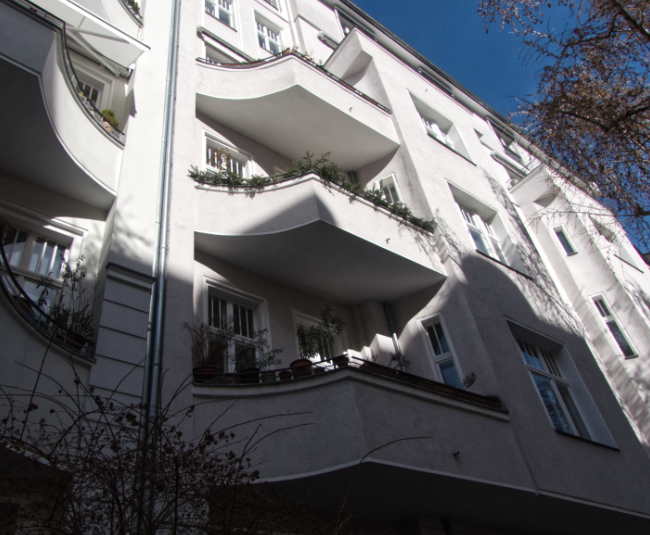
The workers are exhausted. They must keep up with the machines and those machines are working ever faster. There are fires on the edges, smoke on the horizon, sterile environments are need for the production of filthy gases.
The building of radio towers. On the hillsides. Deadly messages. Signals of war. The secret coded messages of the exact time and place of the attack. In the mirror the bomber pilot admires himself. The enemy no longer has any air defences. It will be easier to execute the genocide.
In the marshalling yards, metal railway wagons. Cattle trucks. The cattle are gone. Now they fill with people, crushed humiliation, crazed authority; bureaucratic order, bureaucratic orders, a list of names. They are ticked off, one by one as they are marched to the death camps.
In a bar, someone explains that the city is being sold to corporations.
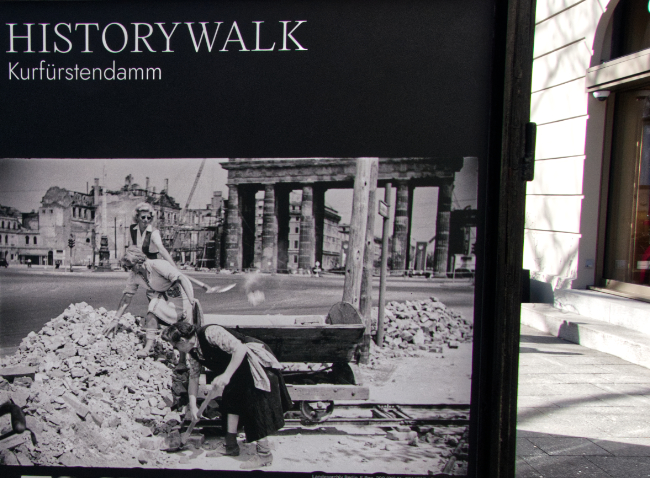
You might imagine that Berlin is a baroque city with this and that about Kaisers and Empires and the relics of the bourgeoisie. It certainly once had that history and other histories too. So much war, bombing without end, deadly street battles, gut churning sexual violence.
It’s hopeless to try to compare the city to some other place. It is not Paris or London or Amsterdam or Madrid or Prague or Vienna or anywhere else. If anything, Berlin is a long lost cousin to New York. The modernism, the wide and long straight roads. The Kurfstamdamm doesn’t lead to the Champs-Élysées it takes the traveller to Fifth Avenue. The S-Bahn doesn’t connect to the London Underground but to the A-train.
Fluid memories in the city, not baked into books or frozen onto celluloid and digital film. Stories of resistance, hiding, exile, migration, the changes observed in people, the dominance of the bully, the power of dictatorship.
All the buildings are in the wrong place, the streets have been muddled up, the railway lines and subway tracks never go to where you want to be. There are even parts of the centre of the city that have the atmosphere and style of a badly designed industrial estate.
There’s a large police presence. I’m walking along minding my own business. A cop steps out. By the unwritten law of the street I have right of way; it’s observed by millions of people on a daily basis. He steps in front of me so I have to change my steps. It’s just to express his ‘authority’; but who gave him the right to do that? He has a bald face like Putin’s. There is no joy there.

In revenge I stop to take notes in my pocket book and photos of things that might be a thousand miles away but really I’m looking at them looking at me. They seem uncomfortable; they are afraid of pens and pencils, they are afraid of notebooks, they are afraid of people taking notes, they are afraid of the photographs from the streets, they are afraid of people who walk slowly, they are afraid of people who walk quickly, they are afraid of people who write, they are afraid of people who don’t write;
…so why the hell are we afraid of them?
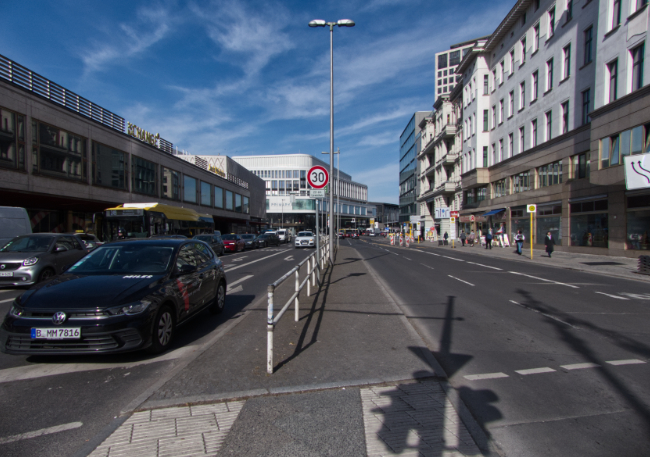
Daniel walked these streets and had a vision of a ram and the ram was the symbol of the end of empires.
There’s a guy playing electric guitar who looks like he might be from any of the great continents and has crossed the seven seas and yet has no place to call home. I like his style and make a donation to a cup on the ground in front of his feet. I bow in reverance to drop the coins; he plays me some rock and roll that lifts me from this tired ground and I float.
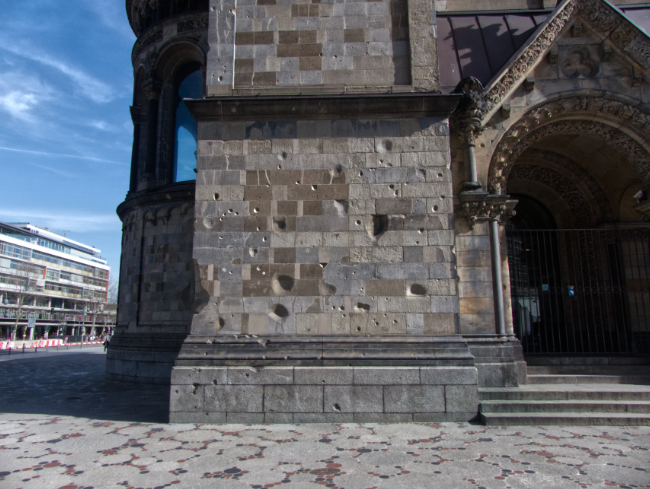
Everything about Berlin has now been boiled up and boiled down and the weird potion has been poured into the U-7 train to Wilmersdorfer and then somewhere along the line it was rehydrated and these strange swamp things came back to life. I don’t know if they are real people.
And then this creepy old bloke gets on and sits opposite me with a young woman with big trousers and even bigger shoes and peroxide hair and eyes that hold something about the world that the world would be better off without. He puts his arm around her shoulders and strokes her arm. Her look is blank.
He gets off at Zoologischer Garten and waves to her from the platform but her eyes have no life left in them. When the train moves on her real distress spills onto the hard cold floor of the U-Bahn train. All she knows is cold hard floors.
How many note books can I exhaust on this one journey on the U-Bahn? Here I go, writing for no-one but myself:
“The sectarians are in tiny groups but talk so much about the masses’
I think that’s pretty good. I might even underline it.
I meet a Palestinian man in a bar. Until he came to Berlin he had lived his entire life in a refugee camp of 120,000 people in Lebanon. He was draped in poignant dignity and sadness. He was selling badges of the Palestine flag.
The late night workers in the kebap shops look exhausted. A few hours of dreamless sleep and it all starts again.
Everywhere I stay in Berlin and everyone I visit are all at the top of five flights of stairs. Well spaced out steps that are larger than stairs might need to be. People talk of climbing Everest. They should live in Berlin for a week. That’s tough too.
It seems an age has passed. What are all these people doing in Berlin? What keeps them here? Travellers through the night, a church spire in a distant street, two thousand years of worship, scripture, belief. Clusters of offices and department stores. The competitive pressure of wage rates, the rate of exploitation, the cost of raw materials, the acceleration of the speed of production, the tension between the rise in land values and the cheapening of the price of commodities.
The war industries of Krupps in competition with the war industries of Vickers and then the war industries developed in the United States, Japan, China, Russia and beyond.
Making money out of blood and custard, inside the intestines on the floor of the class room. Crushed hands, lumps of stone, mud full of grey worms. Capital brings it all together and makes a dance to the sound of mortar bombs and the slicing, cutting and thrusting motion of swords and daggers.
The parks and lawns across the city have been churned into mud by the tracks of tanks and the heavy boots of the infantry, crouching in the fox holes, pressing into the ground so hard and deep, the fizz of bullets. The battle streets are still now, the birds have flown, the sun warms a haze the dead men and the dead horses have swollen bellies and green faces where the mass of flies feed. They enjoy the taste of human flesh.
People are wearing badges that alternate with messages of love and hate.
The Charlottenberg station should be a little further north or a bit more south. Either would be of benefit to more people. Instead it’s exactly where it suits no-one. Someone is shouting about a green suitcase, someone is singing loudly on the platform. This train is going to WestKreuz but I want the other direction. I decide to walk.
Berlin wakes up, opens its arms to greet you and meets you with a warm embrace. And you finally feel glad to be here and anyway, Berlin has moved on to other things and to bother other people and to scratch itself and nod itself to sleep in the hazy late afternoon, a nap before the night starts and all that will bring.
Das ist eine Grosse Stadt; only don’t tell anyone. It might spoil the web of spells the city knits together. Hans Fallada smokes a cigarette in the street. He’s looking for morphine and alcohol. Better to die of an overdose than a Russian bayonet in the belly.
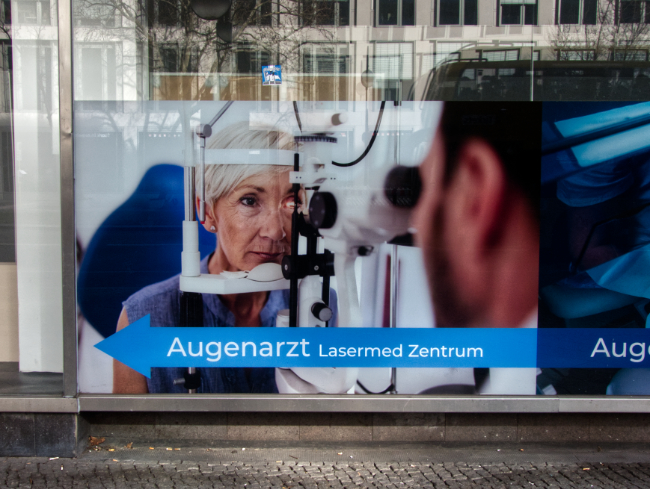
Some are writing stories in their heads within the city streets. It’s literature and film, symphony and scat, organised orchestration and jazz free form. Others have nothing there, no inner life, they vote for the fire hydrant. You are both director, actor, spectator, exhibitionist and voyeur, changing from one status to another in split second mis-timings.
One never arrives in Berlin and thinks, wow! The immediate thought is, what am I doing here? I must be crazy to come to such a place. A woman walks past me and gives me half a smile and a shares a glint in her eye; she too is travelling through the city. This walking never ends, it will be with the city, and all other cities until the day after the end of time.
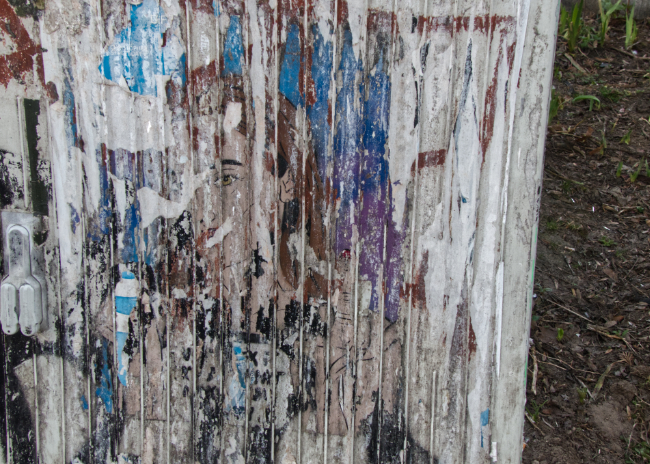
The city is an art installation, a conceptual exhibition from some far off stream in the woods near the border with the lost world to the point where all the cables, networks, railway lines, electricity cables, gas mains and water pipes converge somewhere just south of the Kurfürstendamm.
Everything is fascinating, a never to be forgotten display of forbidden art forms. The plastic cup upon the grey stone of the pavement. It’s not an accident it’s there. A women in a pink costume, pink top with white lace trim, pink knickerbockers with white lace trim, she’s riding a bicycle that goes back and forth in time.
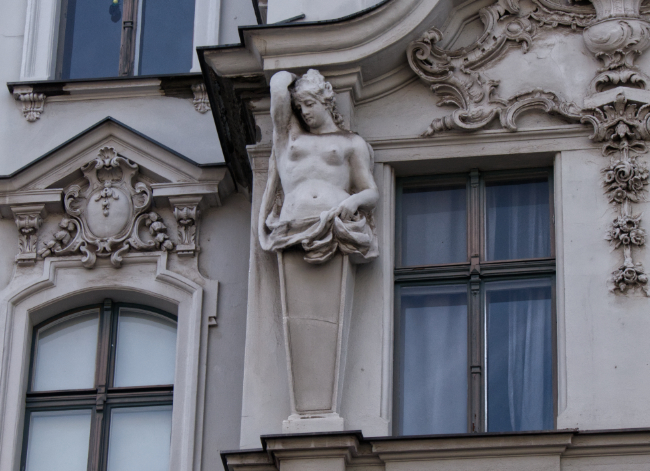
She stops to ask me for directions on how to reach the future. A stone head above a doorway closes its eyes. It will wake again in a hundred years. A piece of white card has been placed against a tree trunk. How does a tree grow among all this glass and concrete? The card is deliberate. It’s part of an installation that involves every city in the world; Berlin is just a part. Wasn’t it always like this?
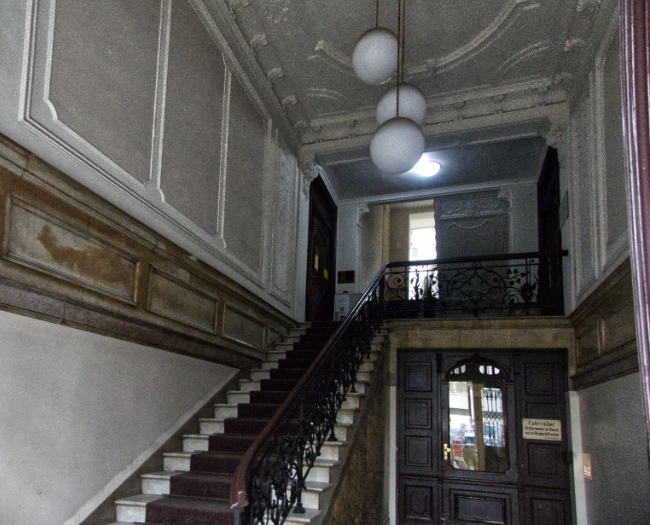
Everything’s been moved around since I was last here. And everyone thinks they are the most important person in the city. A woman driving a Mercedes car stops at the traffic light. I’m caught on an island in the middle of the street, palm trees, coconuts, there’s a shark playing in the sea by the beach. She looks at me, I look at her. She is languidly smoking a cigarette and blows the smoke out of the half opened window. I raise my hand and make a peace sign. She smiles and drives on. It’s these brief moments that remain so long.
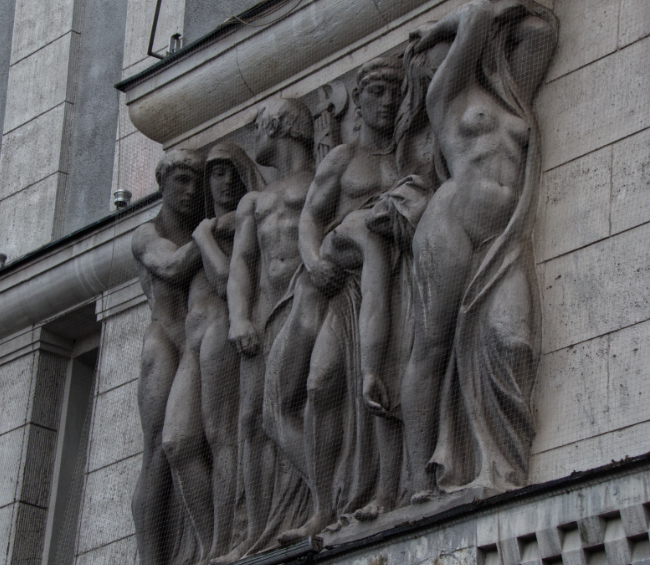
Imagine the city with no electricity, just the light from the fires and the flashes from the guns. No sound of trams or radios or gramophone records just blasts and the rumble of a falling building. Thousands of tonnes of high explosives and incendiary devices are dropped from the sky, artillery shells from the cannon in the Tiergarten, mortars from behind every corner in the street, a conveyor belt that brings ammunition to the front line and a million bullets and more, just in this one street.
And then the war is over and one day a woman appears selling odd bits of string that could be turned into bootlaces. Here’s someone selling two sauce pans. And over there, a pair of trousers with a hole in the knee. All for sale. The trümmerfrau move rubble, lift concrete beams, chip mortar from bricks.
The last time I was here in Berlin? It was during the revolutions of 1848. I can’t remember who won.
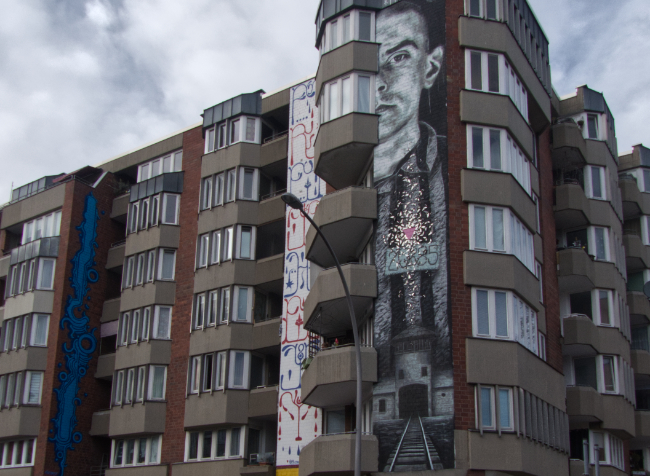
As I go through the doors of KaDeWe I hold them open behind me. The man who is following me in doesn’t speak. But I continue to hold them open. And at the last door he says ‘thank you’ in English. He has two bodyguards.
In Eisenacher Street a man tells me that he joined the KPD in 1919 and remembers Luxemburg and Liebknecht. He looks at me closely while the street scene is reflected in his eyes and when his eyes catch me they drew me in and I see scenes of war and revolution and big strikes in the factories and workers’ councils and Rosa Luxemburg speaking to a large crowd in the Alexanderplatz.
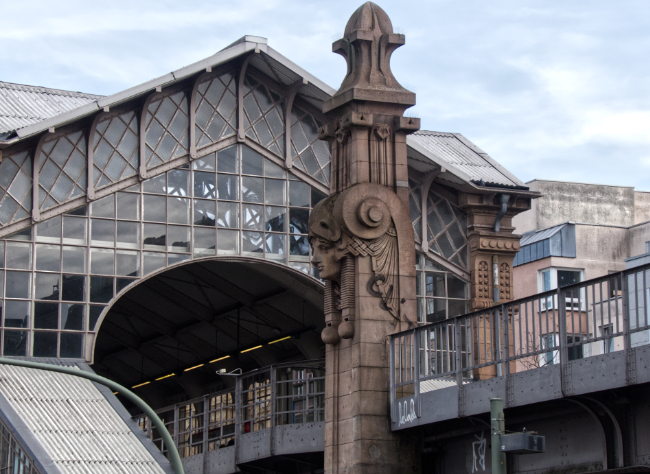
Three women with long black hair, wearing long black coats and long black dresses and long black boots. They have been brought to life here by Hans Baldung Grien; they usually walk these streets naked. They offer something but no-one is brave to discover what it might be. A haunting song; here in the street. The singer is invisible, she lives hidden in the iron work of the Nollendorfplatz station.
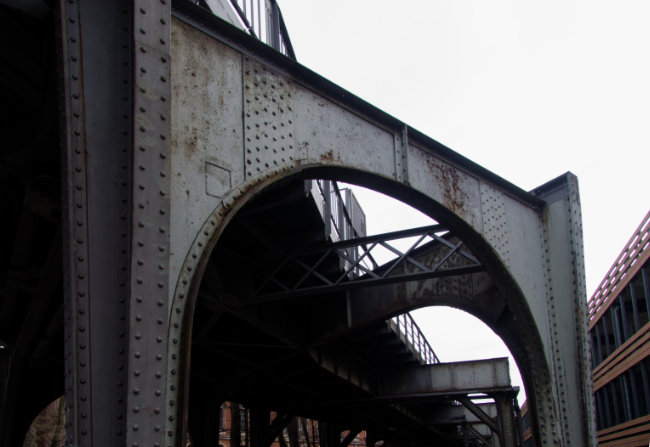
I am talking to a woman who tells me about modern housing in Berlin and then she seems to be in another place and says that Eichmann lived nearby. A flash of intense history; we pause.
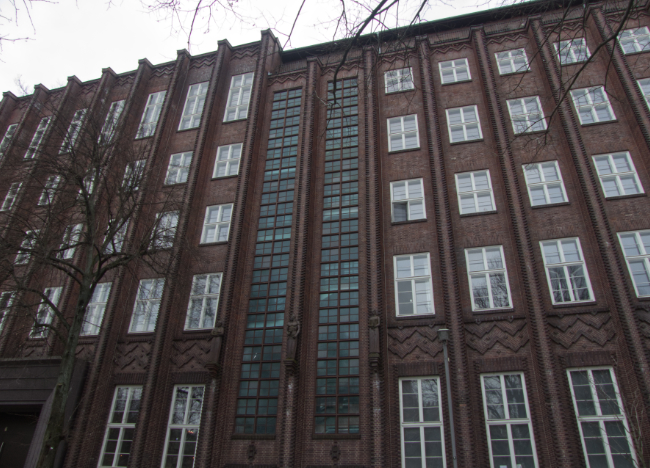
There’s a girl on the S-Bahn train who puts her phone on the seat opposite and starts to film herself; and she’s filming all of us too. Now we are all part of her cinema. She’s the director and producer, we’re the extras in the background.
Remember that scene towards the end of Brecht’s film Kuhle Wampe oder: Wem gehört die Welt? when the passengers on the train are talking about the political situation? It’s the same conversation. The Myth of Sisyphus continues.
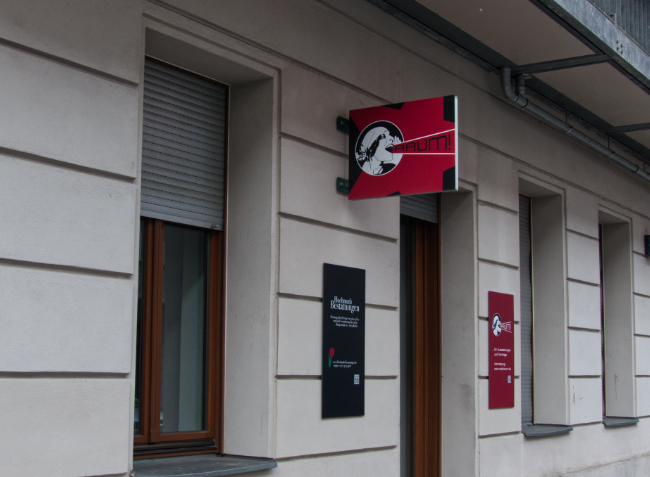
I have arrived at my destination, or do we ever? A second hand bookshop full of left-wing books. A room or two full of German history. It all comes alive here. Hegel, Lassalle, Marx, Engels, Bebel, Kautsky, Bernstein, Luxemburg, Liebknecht, Levi, Benjamin, Marcuse.
It feels as if arriving in a tear of the time-space continuum, a vortex of theory and practice, a swirling helix of history.
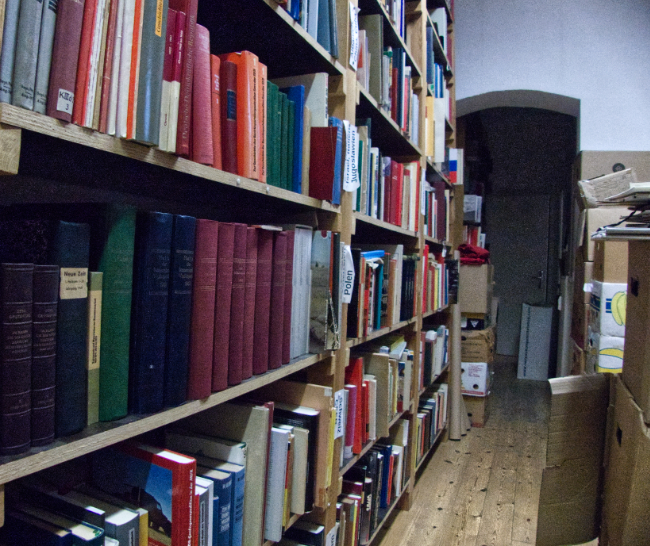
There’s the book I want;
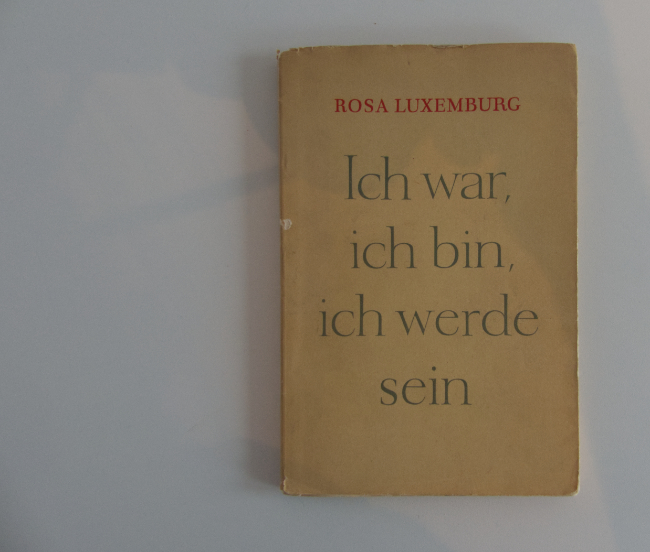
‘Ich war, ich bin, ich werde sein’.
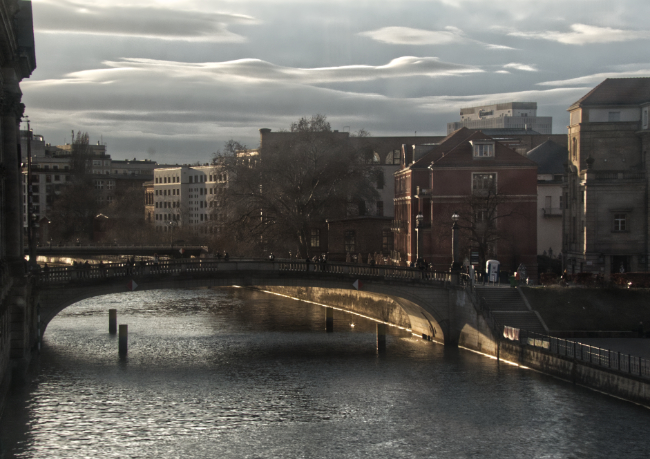
 Commodity Fetishism
You must be logged in to post a comment.