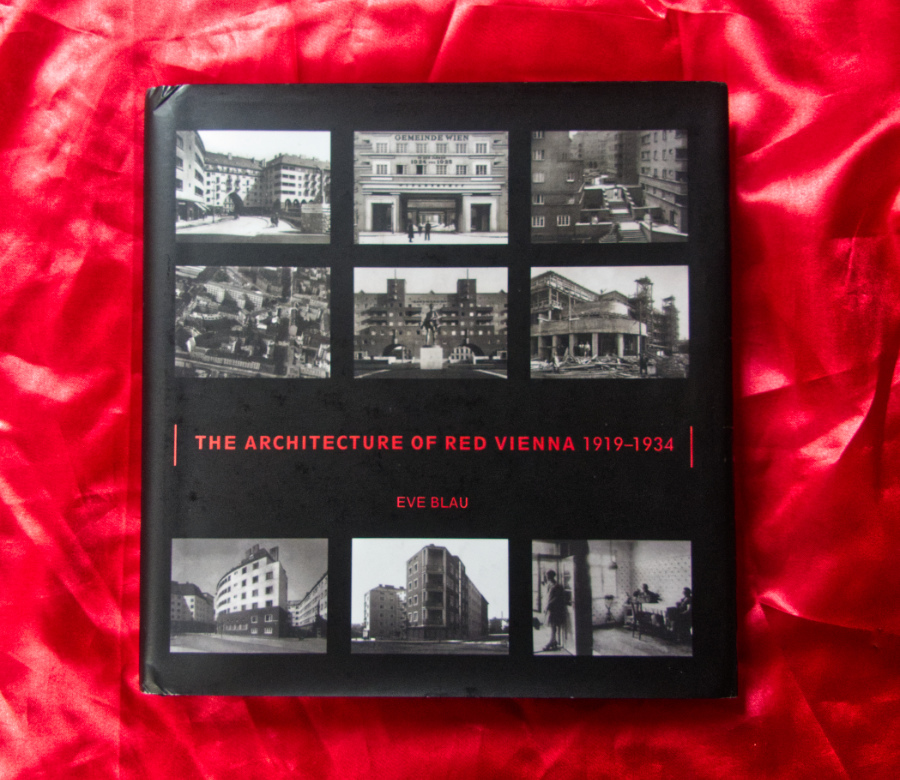
The Architecture of Red Vienna – Eve Blau
This is a brilliant book on the subject of the architecture, design and politics of Red Vienna. A template as to how the architectural histories of cities can be approached.
The Austrian Revolution – Otto Bauer
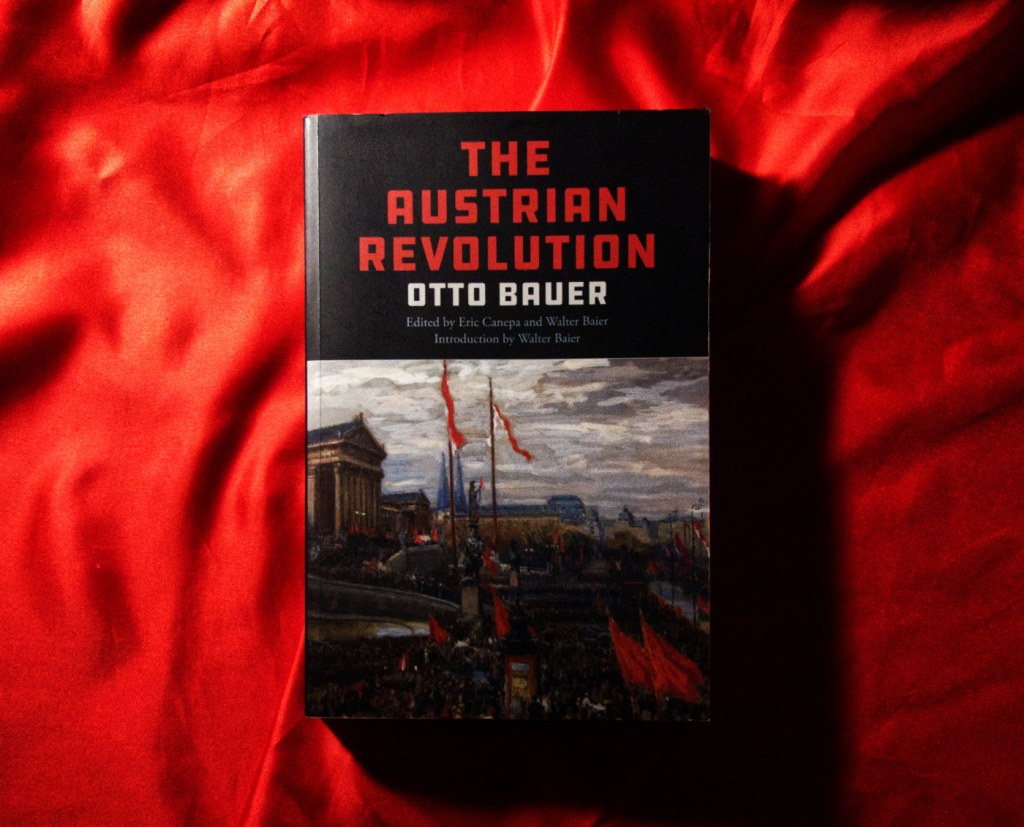
This is essential reading for the political context of the origins of Red Vienna. Bauer personally knew many of the people he mentions and was directly involved in the events.
As clear a history of the dissolution of the Austro-Hungarian Empire as you’ll ever read.
Der Gemeindebauten des Roten Wien 1919 – 1934 – Hans and Rudolph Hauptmann
A complete gazeteer of the housing of Red Vienna with maps, drawings, photographs, lists, notes, descriptions and much else. It’s a big heavy book and not cheap; about the same price as a night or two in the pub. It is worth the sacrifice. Note that it’s in German.
Vienna Diary – Naomi Mitchison
The diary Naomi Mitchison kept while she visited Vienna in the immediate aftermath of the civil war in 1934. She decribes the bombed worker’s flats, fascist murders and imprisonments.
Writings – Josef Frank
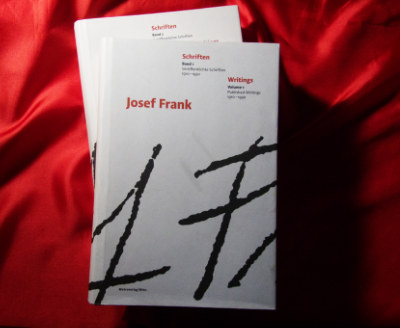
Josef Frank was an architect, designer, socialist and writer. He was actively involved in the first phase of Red Vienna. He put forward an non-dogmatic, colourful, playful and thoughtful approach to architecture and interior design.
He moved to Stockholm to escape the fascists. There he joined Svenkst Tenn and was hugely influential on Scandinavian design.
Joseph Frank: Life and Work – Christopher Long
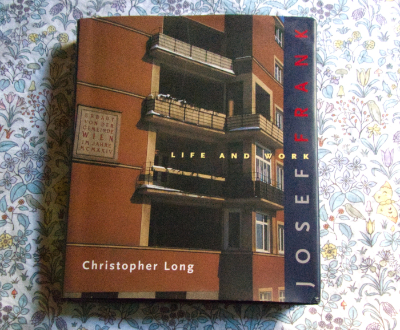
A comprehensive and readable account of Josef Frank, his life and work and the
context of Vienna and exile.
Josef Frank: Against Design
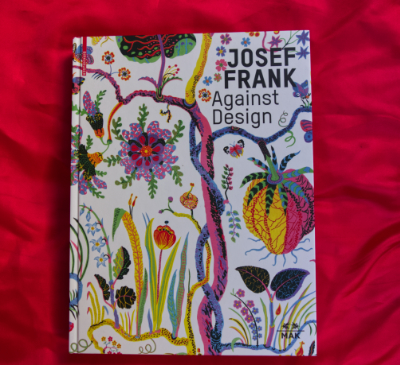
This is a really good introduction to Josef Frank. With lovely illustrations and photographs. It is a series of essays by various writers and experts.
Rebel Modernists – Liane Lefaivre

This was given as a present. It was so thoughtful. How could someone know I would like this book so much? It covers Fin de Siècle to the present day. I found it a good compliment to Blau. As I opened it, an entrance ticket to a recent visit to the Lenbachhaus in Munich fell out.
Finding Ella Briggs
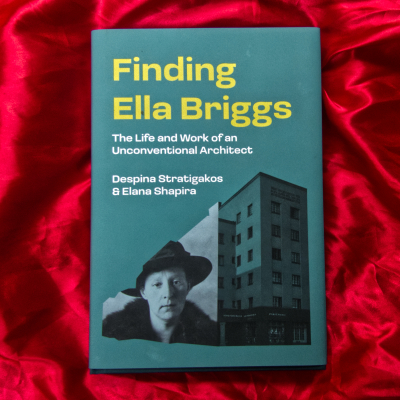
This is an excellent biography of Ella Briggs, produced by a collective of researchers and writers who all share an interest in her work.
Briggs designed Pestalozzi Hof which can be seen as part of this Red Vienna Radical Walk:
Ella Briggs, Karl Marx & Modern Housing
Austria: From Habsburg to Hitler – Charles A. Gulick
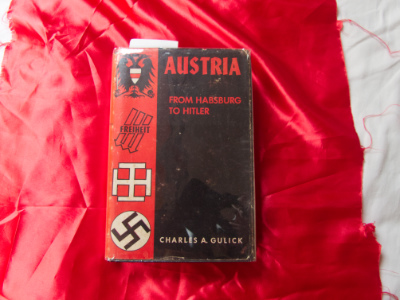
A work of great scholarship. Highly recommended by Blau. Gulick was able to interview many people who had been involved in the period between 1919 – 1934.
Otto Bauer (1881 – 1938): Thinker and Politician – Ewa Czerwińska-Schupp
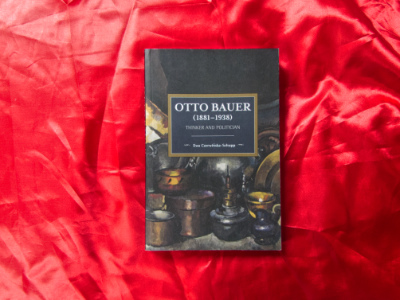
This is a good introduction to the ideas and practice of Otto Bauer. The author sometimes has a dogmatic view of Marxism but that doesn’t distract too much from her analysis of Bauer.
Red Vienna: Experiment in Working-Class Culture 1919 – 1934 – Helmut Gruber

Some have argued that Gruber was being deliberately provocative to generate discussion and critical responses. That’s a fair enough ambition and Red Vienna needs to be approached critically.
However, surely the biggest criticism of the social -democrats was their failure to dismantle the state apparatus in 1919 when they might have done so?
Austria Still Lives! – Mitzi Hartmann
Mitzi Hartmann was the pen name of Eva Schmidt-Kolmer who wrote a personal memoir of the rise of the fascists. This is a good introduction to the political tensions and outcomes by someone who participated in the events.
In short, sharp passages she describes well the tension between reform and revolution and the inherent weaknesses of social-democracy.

The World of Yesterday – Stefan Zweig

A coming of age memoir and a fascinating insight into the intellectual world of Vienna. And how that lovely frothy cream became soured and poisonous.
Modern Housing – Catherine Bauer

Bauer spend months in Europe during the early 1930s and came up with this book which is partly a general overview, something of a history, and fundamentally a call to arms for better housing.
Vienna is put into the context of innovative housing projects across Europe; in London, Amsterdam, Rotterdam, Berlin, Frankfurt, Hamburg, Zurich and elsewhere.
The book still demands serious study.
Revolution in Central Europe – 1918 – 1919 – F.L.Carsten
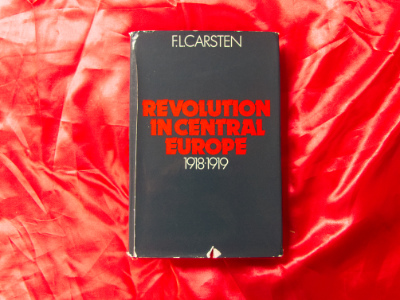
Carsten grew up in Germany and was politically active in the 1920s and 1930s. It’s a readable book full of academic rigour. Excellent on the scale and history of the workers’ councils in central Europe in October and November 1918.
Ornament and Crime: Selected Essays – Adolf Loos
Loos was part of the development of modernism in Vienna before the First World War. He was one of the early and enthusiastic supporters of the Siedlung movement after the war.

I went to see some of the individual houses he designed in Vienna including the Schau Haus and what has became known as the Loos Haus. I missed a trick at the latter as I arrived at what looked like the beginnings of a party. Why didn’t I invite myself in?
Why a man should be well-dressed – Adolf Loos

Worth reading for the title alone.
The Tragedy of Austria – Julius Braunthal
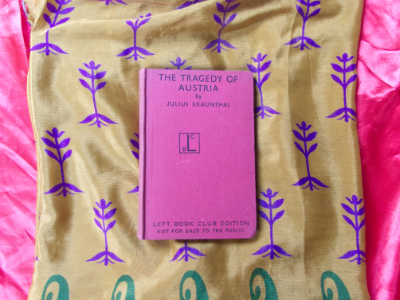
Braunthal was active in the Social Democratic Party throughout the Red Vienna period, including Assistant Secretary for State between 1918 – 1920. He was arrested and jailed for treason in 1934. He managed to escape Austria and moved to Britain. He wrote a three volume History of the International from the First International onwards.
Rotes Wien – Falters City Walks

A new arrival which awaits translating. A must have on future trips to Vienna. It is a series of walks through the city to explore the topography of Red Vienna. Even with my (very) basic German it’s understandable.
Black Vienna: The Radical Right in the Red City – 1918 – 1938
Janek Wasserman
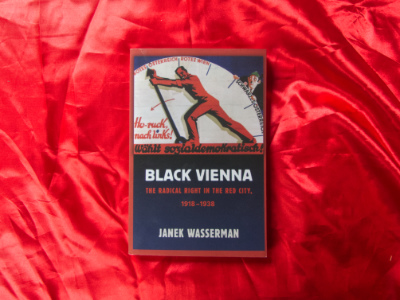
There are many lessons for today as to how the far-right grew in Europe during the interwar periods.
Last Waltz in Vienna: The Destruction of a Family 1842 – 1942 – George Clare

Immensely powerful and moving book. Full of insights of Vienna between the wars.
Fin de Siècle Vienna: Politics and Culture – Carl E. Schorske
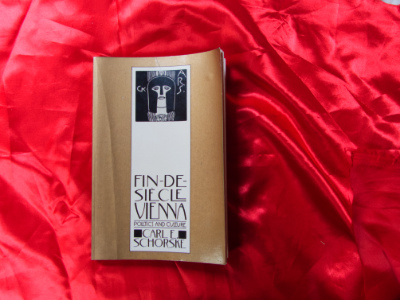
This is brilliantly intellectual and accessible at the same time. It is a joy to read Schorke’s writing (with a crushing feeling that I would never be able to write anything as good as this). This is already waiting to be packed for the next trip to Vienna where it will be read on a tour of the city’s cafes and bars.
Fallen Bastions – G.E.R.Geyde
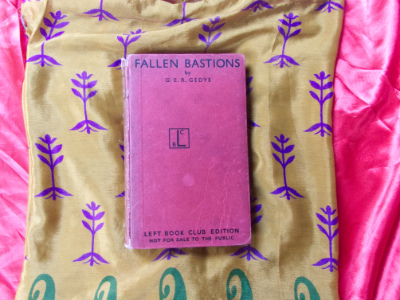
Geyde was a journalist and it shows. His writing is taut and at times reads like a well-crafted thriller. I first read this years ago when I knew nothing about Red Vienna. His descriptions of the artillery attack on the Karl-Marx-Hof housing estate was one of those moments when one version of my ‘world view’ collapsed. These are the best sort of books, when one’s ideas shift into a different place.
Vienna: A Book of Photographs – Alfred Cermak

This sort of stuff can often be picked up relatively cheaply. I think this was a couple of quid in a charity shop. It is telling that the photographs are of a certain sort. Council housing gets a small reference. A useful example however of what Modernism and the architects of Red Vienna were up against.
Die Revolution an der Westfront – Ludwig Lewinsohn
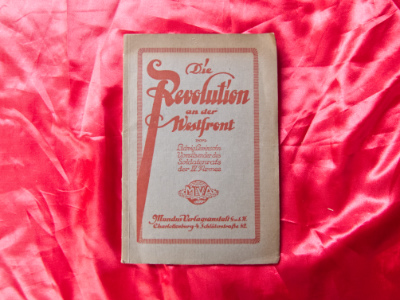
This was published in Berlin in 1920. I’ve included it here as it is one of the few artefacts I have from the time when a huge revolutionary socialist movement emerged in Europe. It is part of the context of Red Vienna.
Konegens Kinderbücher 87
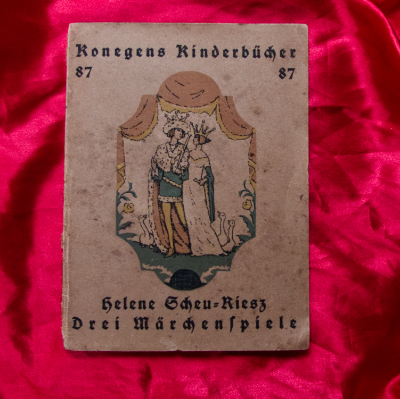
Konegens Kinderbücher was established in 1910 to introduce children to classical literature in an accessible form.
In the early 1920s Helene Scheu-Riesz helped to found Sesam Books. This was based on the principles of learning through different cultures, the promotion of peace and empathy, books should be good quality storytelling, not propaganda, the books should be accessible to all children, including in libraries and low cost.
These books can sometimes be picked up in second hand bookshops in Vienna.
Newspapers
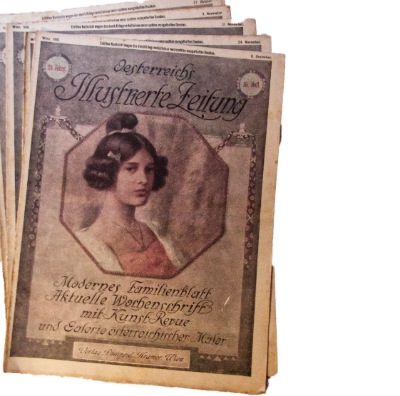
The Naschtmarkt is a great place to pick up newspapers, postcards and pictures from the Red Vienna period. I bought half a dozen of these newspapers for 10 euros. They cover the period of the Austrian revolution and are fascinating.
The Kunsthistorische Museum Vienna
Manfred Leithe-Jasper, Rudolf Distelberger, Wolfgang Porhaska

Charity shops can be good sources of cheap art books. This is a hard-back guide to the Kunsthistorische Museum that cost £2.99 in Oxfam (about ten years ago). If you do go to Vienna you’ll need some down time from Red Vienna. There are many excellent museums, galleries, cafes and bars.
I once spent the best part of two weeks during a cold February in the Kunsthistorische Musuem. By the end I began to feel slightly uneasy that the authorities thought I was planning some sort of heist.
Resources:
Details of all the Gemeindebauten ~ this is a comprehensive database maintained by the City of Vienna which includes the housing of Red Vienna and all the other housing owned by the city. Includes history, architects, number of properties and much more.
Map of Red Vienna ~ I have a feeling this isn’t comprehensive but i) I may be wrong and ii) you will have plenty to do just exploring this
Architects of Vienna from 1770 – 1945 ~ this is one of the best online resources I’ve found on the architects of Red Vienna; and Vienna in general
Vienna History Wiki ~ lots about Red Vienna here. In German but there are so many good translation websites it’s easy to turn into other languages
Red Vienna – Publications 1924-34 ~ this is a superb resource for books published in Vienna between 1924 – 34. There are also links to other reading lists.
Building Red Vienna Danny Bee
Radical Walks Exploring the Housing of Red Vienna
You can use these walks I’ve created to explore some of the housing of Red Vienna.
Ella Briggs, Karl Marx & Modern Housing
The Radical Housing of Meidling, Vienna
Favoriten and the end of Vienna
A Walk along Währinger Strasse
 Commodity Fetishism
You must be logged in to post a comment.