
‘The plan never works out’, my friend the dust cart driver said, and laughed, knowingly. His plan is to return home to Africa and farm maize. But for now, he’s still driving the dust cart as he calls it. ‘But it’s no longer just a truck’, he continues, ‘it’s an office’. And describes the use of sensors along its side that record film which is shown to people who claim they’ve had their wing mirrors clipped, or argue that their bin was out but not collected. The time stamped footage proves them wrong. And my plan for writing didn’t quite work out too. It became something different.
I wasn’t sure what I wanted to write. Something about reading The Communist Manifesto in Brussels, where it was written in the final days of 1847 and the early days of 1848. It was then taken to England where the first publisher developed a fear of arrest and it was eventually published in Liverpool Street in February. Within a few days revolution swept across (that’s a cliche)….broke out (revolutions don’t break out) ….developed; yes, revolutions develop from the existing conditions. Such are the mystifications that paint over the reality with thick globs of garish colour that the reality can be very difficult to see. That it seems impossible that the existing conditions can be the source of revolutionary change; of a turning (revolution, a turning).
I did read The Communist Manifesto in Brussels but I don’t really have anything to add. It’s probably best to read it or re-read it for yourself. Although I recently discovered that Terrell Carver makes a convincing case that the first two chapters were very likely to have been written by Engels. That might be new to you as well.

Instead I walked around Ixelles and got carried away with the energy on the streets. I wanted to take street photographs of the people hanging around, leaning on the doorways of shops selling yams and sweet potatoes. I stood back on the pavement to let a man past who was carrying a box of water melon halves. He nodded a quick gesture of thanks. But I don’t know the idiom of these streets. Sometimes being a naive outsider, or at least having that appearance, can open up certain possibilities, but not if you appear to be a fool. I wasn’t sure how to act this out so I didn’t take any portraits and instead made a note of doing some research into the best way to approach this.
Outside the Porte du Namur – was it only two days ago that I arrived there – crowds of people leafleting for the forthcoming elections. People discussing and talking in ones and twos, slogans, t-shirts, posters, leaflets, ideas and strategy and tactics. A lot of the shops have posters up of the various candidates. It creates a democratic atmosphere, something I don’t remember in England for some time now.
A tall Black woman with braided hair hands me a leaflet, ‘Bonjour monsieur’, a man in a green shirt – I assume part of an environmental group holds out a leaflet and speaks rapidly in French,
‘Pardon monsieur, je suis un visiteur’
‘Ah, enjoy the city’, he says in English.
Fragments of history and wisps of theory. The development of industrial capitalism in Belgium, the Catholic influence on parts of the labour movement, the shocking conditions endured by the Walloonian miners that led to desperate, angry and violent outbursts; again and again demanding better pay and improved conditions. A reference to the influence of anarchism and syndicalism on their thinking. The issue of the Flemish language and the socialist movement; reform or revolution? Party building or cultural movements? Internal party democracy, relations with the Second International.
The vast wealth accumulated by the ruling class through barbaric imperialist intervention and violent colonial conquest in Central Africa. How do all the connections on the streets form, come together, move apart, gel, dissolve. Conscious histories of deprivation and pain, untold sufferings silently passed down through generations. Photographs of slaves are shocking; dehumanizing, dismembering of the psyche and soul of real-lived people. It seemed impossible then, it seems impossible now, but an alliance of miners and slaves would have been, would be, could be, the power that breaks the power of capital. To overcome the racism would be a turning, so that each of us would face the reality of what is, rather than how the head fixing machine pretends it all to be.
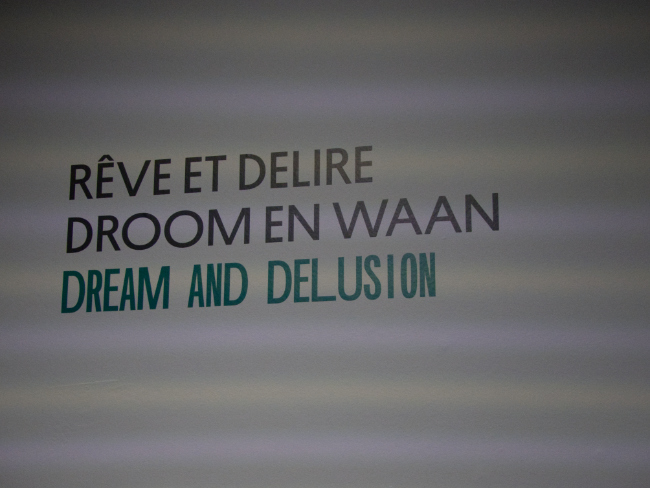
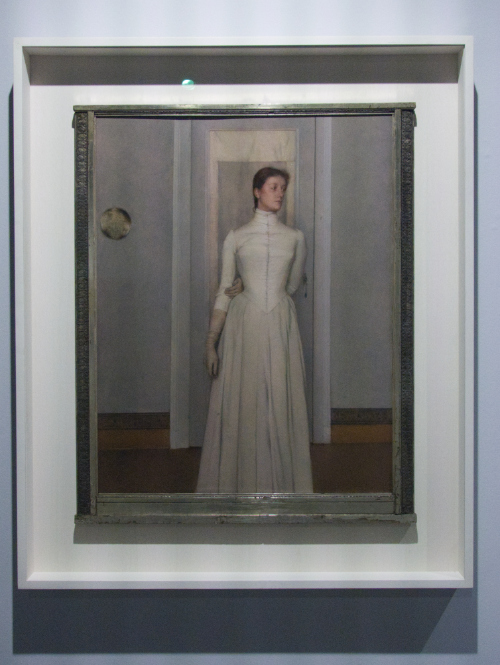
A visit to the 100 years of Surrealism at the Royal Museums of Fine Arts of Belgium. I realised it was something I wanted to see. I enjoyed it a great deal and I think more so in that surrealism formally ended, rather than continuing with a sense of exhaustion and of trying to reinvent itself for a different time. It was of its time, of itself, connected with its time in so many different ways.

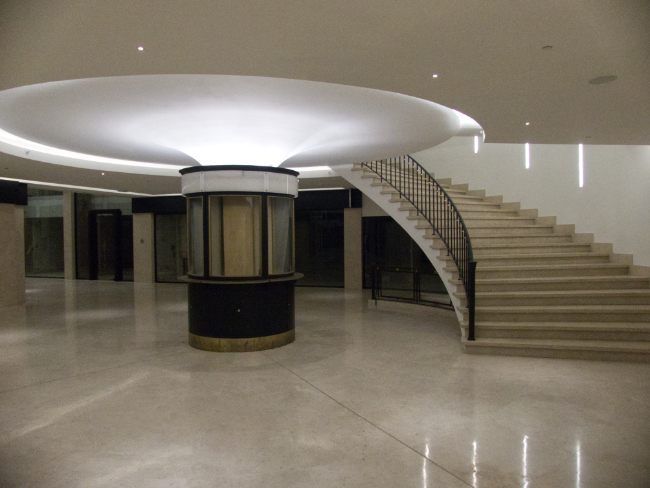
Early Friday evening in a genuinely weird part of the city. An arcade that’s now mainly empty. What has happened here? As if something organic had died. In a sense it has. Capital feels as if it’s organic even though it isn’t. That’s part of the mystification, the sense that something as dead as capital is actually the thing with greatest life. Empty factories, boarded up shops, and this peculiar shopping space – or former space – are the skeletons that capital leaves behind, the fossilisation of empty space where profits used to form.


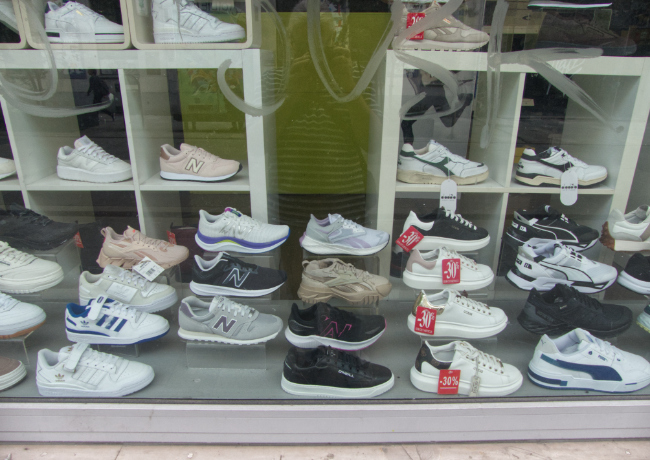
Into a department store. It’s all predicated on cheap exploited labour. The cheap clothes, the expensive clothes; it’s all exploited labour, some of it very poorly paid and working in grim conditions. Handbags, lipsticks, bottles of perfume, phones, cameras, the mass consumer goods. Car labour in Europe in competition with car labour in the USA in competition with car labour in China. The highest paid workers in Chinese manufacturing plants now have wages on par with the lowest paid workers in manufacturing plants in the United States. This is important but I can’t properly work out why.

Oil.
A global oil industry. It’s dripping oil into plastics into nylons and rayons into petrol that fills the cars that fill the Avenue Louise. I walk along the Avenue Louise. The cars are noisy, brutish and ugly.
[In January 1943, a Belgian pilot, Jean de Selys Longchamps flew a Hawker Typhoon fighter along the Avenue Louise at tree top level to shoot up the Gestapo headquarters and torture chamber that they had established in an art deco apartment block].
Imagine if the global oil workers organised. If the oil workers in Iran and Iraq found common interest with the migrant construction workers in Dubai and Riyadh, the factory workers in Cairo and the dockers in the Port of Jebel Ali. Marx and Engels finished The Communist Manifesto with a simple call to arms: ‘Workers of the World, Unite’.
This was the force to challenge the rule of capital, the revolutionary power of the proletariat. They also described the initial revolutionary character of the bourgeoisie and the dynamic force of capitalism. And how even with its dynamism it is essentially a cannibalistic force. The bourgeoisie is constantly eating itself, capital is constantly eating capital. The creative power of bourgeois-capital is also its own destructive power.
‘The conditions of bourgeoise society are too narrow to comprise the wealth created by them. And how does the bourgeoisie get over these crises? On the one hand by the enforced destruction of a mass of productive forces; on the other, by the conquest of new markets, and by the more thorough exploitation of the old ones’.


There’s some sort of party going on. I stop to ask what it’s all about. It’s a gathering of people who enjoy the arts, I’m told, watching the people having their tickets checked, feeling the security people watching me. There’s a young woman holding a tray of champagne glasses. She holds it until she’s relieved. Her arms must ache. A fixed smile makes the soul hurt. Working as a waitress.

The evening light is radiant and atomic, soft and diffuse. The pressure of the working week is lifting. The workers of Brussels, indeed the workers of London, Paris, Amsterdam, New York City, Delhi, Shanghai, Lagos and across the world are seeking out some relief from the intensity of productive alienation and daily exploitation. The do this, do that, don’t stop world of management intimidation, the speed of machines, the noise of pile drivers, the mechanical grinding of motors, air conditioning in offices and warehouses, the steady screaming of metal upon metal.
I take a seat in Le Perroquet to finish off some notes. The waitresses are everywhere at once, a couple of glasses of red wine to that table, plates of food to the table next to that, taking another order, someone pays the bill, a group of people come in and ask if they can have a table for six, the lovely chug-a-chug of conversation, like an old fashioned steam boat on a nice lake in the mountains with a bright blue sky and white fluffy clouds. It’s a great ambiance, people talking, just talking, all the stories of the day, the gossip in the offices and department stores, shared and laughed over, the release of the work tensions, flirtations, hopes and possibilities, romantic dreams, the sense of freedom from the alarm clocks of the future.
I hear the sound of a glass being put down on the marble table top. I look up. Without being asked, the waitress has bought me a lovely foamy golden beer. She doesn’t say a word. She gives me a wink that rocks my soul and a smile that makes my heart glow. Tomorrow she’s going to see the surrealism exhibition, to get lost inside the paintings, to stand and be absorbed by Jean Delville’s painting The Dead Orpheus and more.
I raise the glass; waitresses of the world, unite.

 Commodity Fetishism
You must be logged in to post a comment.