
Starting points…where to start? It seems a flood, of hate and bile and anger and screwed up raging faces. Influencers, social media companies, the right wing press, the shock troops of the new right, lies and dis-formation. Anything goes.
Pointing fingers, provocative behaviour, murder-speech, writing lies and far right propaganda.
A newspaper claims a ‘pro-Palestine’ demonstrator punched an elderly man in the face. This never happened. And yet the lie grows, amplified, here come those with the backing and support of money-power. They choke the airwaves, the airways, suffocate the room, emit a stench, occupy the print runs, flood the social media channels of the internet.
Who is paying for all of this? Where’s the money coming from? The flags look new and shining (the ‘Made in China’ label hurriedly torn off). Anger is the fashion, ignorance the game.
The ferry slowly leaves the port. It’s movement from the quayside at first so slow and gentle. The power of the engines to push it through the sea in the wildest storm but to enable it to manoeuvre in the small spaces inside the port and harbour infrastructure.
Across the Channel, radio messages, sea positions recorded by complex scientific instruments and then beamed into space, moving through the constellation of satellites and back to earth again. Electronic data, stripped down to the basic necessities of 1s and 0s. Autonomous networks on the edge of deep space interacting with autonomous networks on the sea and ground. It’s machine made; it’s human made, the two characteristics, inseparable.
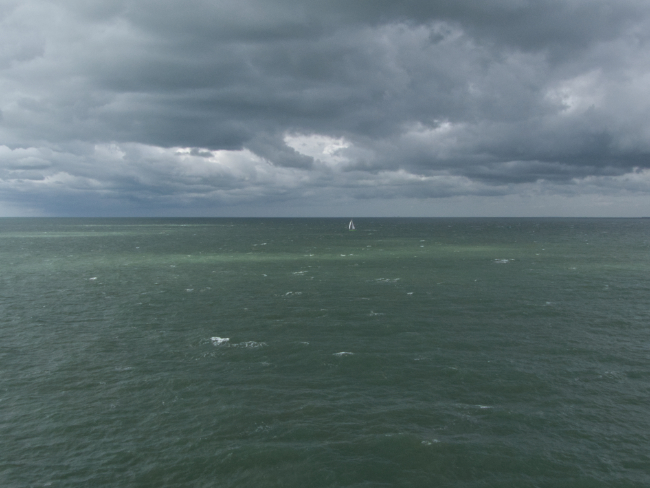
How many autonomous networks are there?
Utilities, building maintenance systems, electrical substations, phone masts, DNS servers; they are largely independent of human hands, except for regular and planned maintenance and the occasional breaking down, and of course their actual production.
Marx liked to measure; the number of frock coats and bales of cotton, the rate of exploitation, the length of the working day. But where’s the measure now? How much of production is already automated? How much could be automated with the existing technologies? How much could be automated with the development of technologies? All of it, surely all of it?
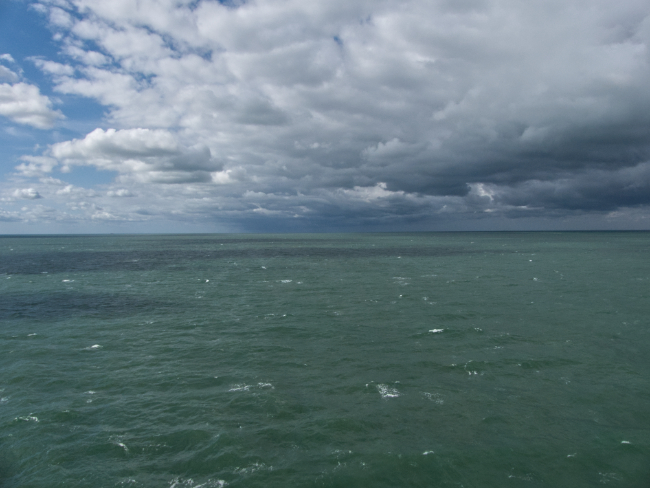
Who wants to be doing boring, tedious work, standing by a conveyor belt, standing by a checkout, holding on to a wheel. Why do people still do the dirty and the dangerous work when this could be by machine?
Immense masses of technologies, machines, precision tools, millions of circuits on one silicon waver, so small, it cannot be seen by the human eye. Ships of thousands of tonnes, buildings hundreds of feet into the sky, tunnels beneath the earth, rockets and guns and kidney machines and the price of everything.

The cross Channel ferries now have glass panels that surround the outside decks. It spoils the view. These things are designed by people who don’t understand design. They talk a lot of stuff and get paid a lot of money but they are mediocre. Their ideas are poor. For some reason they hold power, all the way up to the top of the wage-slave hierarchies.
There is one small place on the deck, between some metal stairs and a life boat where these panels don’t exist. It’s possible to lean on the rail and look out to sea as if it were a crossing of a hundred years ago. There in the distance, a steam and paddle schooner, there a sailing ship, heaving to in the wind.
I was reading the letters of Jenny, Laura and Eleanor Marx.

The sisters crossed the Channel at regular intervals in different combinations and with different people. With boyfriends, husbands, their mother and father, with each other or alone. They lived in England, London, Paris, Argenteuil. There are references in the letters to sea crossing, everyone sick but me, writes Paul Lafargue on one occasion. A long crossing as we didn’t leave Folkestone until 2am and then delayed in Boulogne, writes Eleanor.
No one mentions it but it is tantalising to me; what of the changes in ship technology in this time? The Channel crossings start in November 1847 when Marx and Engels come to England for a meeting of the German Workers Educational Association (Engels does the trip earlier).

It is at the conference that they are tasked to write something, it becomes the Communist Manifesto, first published in February 1848 in Liverpool Street, London. Just days before Revolution starts to try and dust away the cobwebs of European feudal history.
And for the next forty years or so these crossings will continue. But no mention of the ships! No-one (that I have yet read) remarks on the transition from sail to steam and the hybrids in between.

No mention of engine size, crew size, working hours, rates of pay; Marx and the Marx Party miss something here, and they are generally excellent at measuring rates of pay, rates of exploitation and the length of the working day.
Sea crossings could be stomach churching and unpleasant and dangerous in those days. Perhaps their minds were concentrating on survival and the safe arrival.
People come to lean over the rail and point out to sea and exchange comments about the way the coast of France is increasing in size and the coast of England diminishing. Small children using technologies to take photographs; phones, tablets, sometimes even a camera or two.

‘Are we going to France? Is that France? Will we see the Eiffel tower?’. This amazing curiosity, so taken for granted, so easily destroyed by something called, ‘system’ and ‘politics’ and ‘the Israeli Defence Force’. Never in history have there been murderers who whinge and wail so much about their public image.
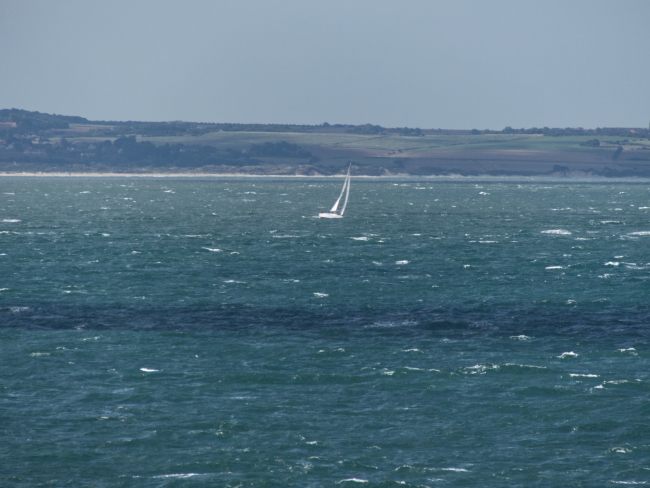
The ship slows down, into the channel that will take it into the port. Human hands, watchful eyes, all senses on full alert; guiding the ship, moving the ship, mooring the ship. Anyone and everyone connected to the sea, takes the sea with great seriousness.
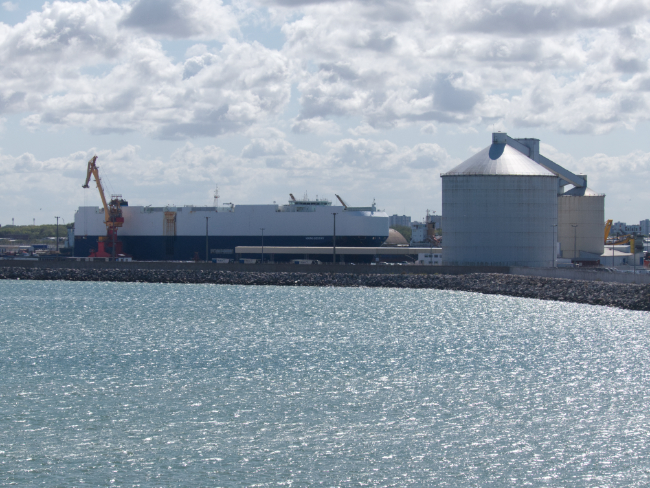
The infrastructure of production, at a global level, all around us. Beware those who demand leadership who seemingly fail to see it.

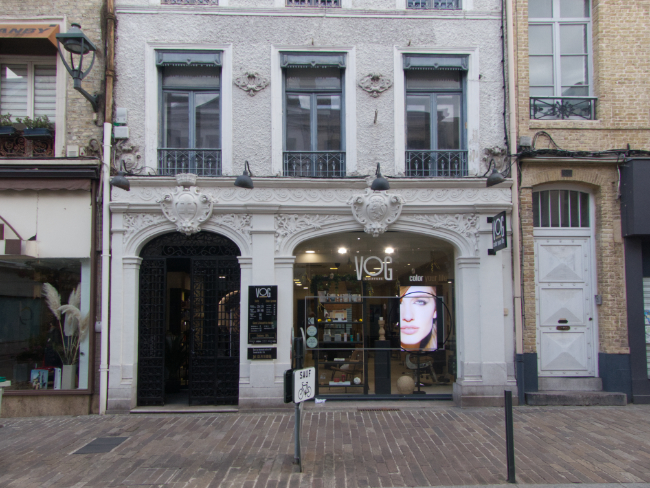
It is so still and quiet here in the apartment that I’m renting. It’s a France from the eighteenth century. There is the possibility of revolution.
The rooms have high ceilings and the shutters have individual, hand made ornamentation. Perhaps if all the toil-processes are automated this is what people can do. Carve wood, hand work metal and clay, make clothes and furniture by hand, build houses with the ancient crafts of carpentry and stone.
So much needs to break; the dominance of capital, the wages-system, the control of consumption by price rather than need. Where does the hatred emanate from? Is it price? Is it value? Is it the brutal force of capital? And yet why are the right so able to manipulate people to imagine that it’s race, colour, religion, different ways of cooking, attitudes and impressions? Where is the communist intervention?
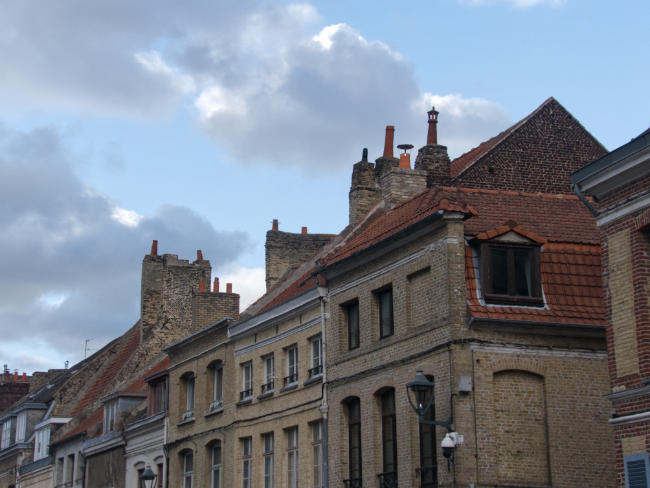
The light has changed in the most imperceptible and glorious glare phenomena. The sky is luminous and blue, the terracotta tiles on the building opposite have burned a deeper red. Across the rooftops the sense, just over there, of a utopia in hiding; screaming for sense to take hold; in one hand holding up the still beating heart of the remnants of Enlightenment thinking. In the other hand, dripping blood. These are two possible elements of the future; salvation or eternal damnation.
The floor is uneven, broad, tea-stained wooden boards, from the deck of a ship. When it was broken up, these boards came here, to a street in St Omer. The bare feet of a generation of sailors can be felt upon their surface.
The stairs dip and rise, alongside runs a wooden banister, held up by metal rails. It curves with a luxurious magnificence, just because it can. The workers have finished, they are happy with this work. They speak in growling voices and yet their labour-dignity is tempered by what they’re paid. It’s not enough. How can this be considered a fair reward?

It is pointless to point out to authoritarians the dangers of dictatorship. That’s what they wish for. They are buying the party cards with the low serial numbers; this will buy them favours in the future. They want concentration camps, they want gas chambers, they want death, war, destruction.
Is this a deep psychological flaw in humanity itself? Will humanity be the final extinction and once that’s happened, the earth will breath again, and from rocks and mud and simple-complex lifeforms, some new form of life will come once again. Is that our best hope? An imagined possibility?

People with boiled heads are running the world. People who want to boil their own heads are quick to follow. They all have fish-scale eyes, sewer breath; when they eat, all they taste is ditch bilge acid, when they speak, stale smoke forms the words. They wear the scent of dead-flesh.
Outside in the street, on the cobble stones, a cart is being pushed. Human heads piled up. The guillotine’s been working hard today.
Now the blue in the sky is more intense and there is a mysterious grey mixed up in that oil-paint palette. The sky is indigo now. I loved that word as a child, it evoked something beyond words, beyond my ability to think; brilliant, dangerous and wild. Now the sky here has taken on that role, ever deeper blue, into indigo.
I have a faint regret that I should have bought a jar of pickles and a fresh tomato or two to accompany the bread and cheese for supper. The wine is good, heady, heavy, dark and open like the sky. I bought it in a shop where the proprietor and I spent a happy time exploring a map of France pinned to the wall. He explained in great detail the differences of the wines of the Rhone and provided a virtual tour of Bordeaux, Alsace and the Loire. We could have continued; perhaps the next time I call.
It is all so precious, vibrant and fragile. Life and nothing but. Perhaps the struggle now is this; between life and death. The right imagine it’s survival of the fittest; but the great danger to them, is if the mass of people realise that in fact, it’s mutual aid.
An autonomous network of fabrication and production. An autonomous network of communities of production, of communities of practice, of communities of interest.
A network of these communities, of communities at the centre, of ideas, of fair-minded cooperation.
Perhaps after all, it will be from practice that communism emerges.
 Commodity Fetishism
You must be logged in to post a comment.